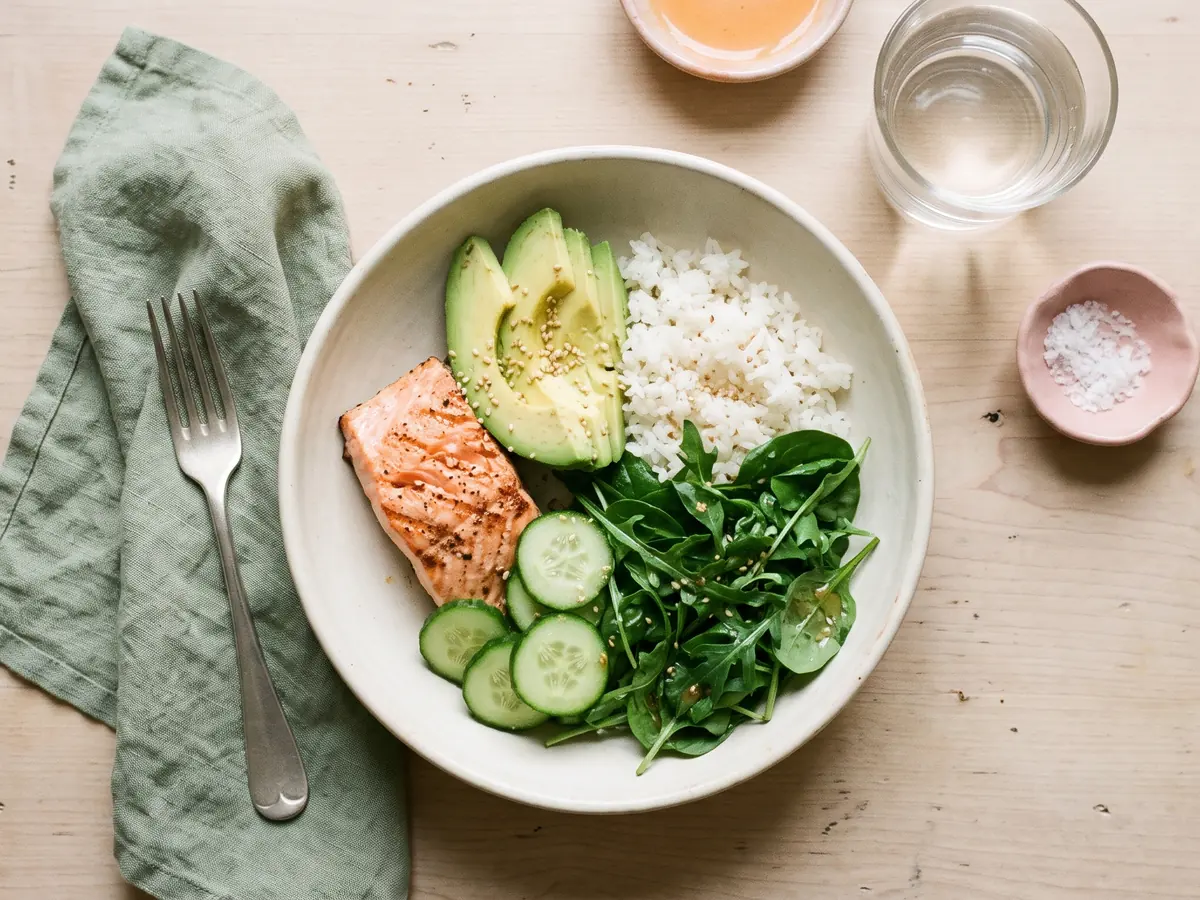
Short answerTo calculate macros, multiply your daily calories by a percentage for each nutrient, then divide protein and carbs by 4 and fat by 9. At 2,000 calories, a balanced 25/50/25 split gives 125 g of protein, 250 g of carbs and 56 g of fat.
To track your macros day to day, see our comparison of the best macro tracking app choices, free and paid. For a ready-made week at 1,800 calories with 117 g of protein a day, see our 1800 calorie meal plan. Macros are one side of eating well; food groups are the other. Our guide to what a balanced diet is shows how the two fit together, with a sample day. At 1,700 calories, the 1700 calorie meal plan averages 112 g.
How to calculate macros
"Macros" is short for macronutrients: protein, carbohydrate and fat, the three nutrients that give you calories. Working them out takes three steps, and this macronutrient calculator does them for you.
- Find your calories. The calculator estimates your BMR with the Mifflin-St Jeor equation and multiplies it by your activity level, the same way as our TDEE calculator. Then it adjusts for your goal.
- Pick a split. Choose what share of those calories comes from protein, carbs and fat, for example 25/50/25.
- Turn calories into grams. Protein and carbs have 4 calories per gram and fat has 9. (Our calorie converter explains where those numbers come from.)
Here's a worked example: a 35-year-old woman, 5'5" and 150 pounds, moderately active. Her maintenance is about 2,130 calories. To lose fat she aims for about 1,630. With a high-protein split of 35/40/25:
- Protein: 1,630 × 0.35 = 571 calories ÷ 4 = 143 g
- Carbs: 1,630 × 0.40 = 652 calories ÷ 4 = 163 g
- Fat: 1,630 × 0.25 = 408 calories ÷ 9 = 45 g
That's 2.1 g of protein per kilogram of body weight, plenty for keeping muscle during a diet. Want to figure out your macros another way? Enter a calorie target you already have, and the macro calculator just does the split.
Macros for common calorie levels
These are the grams per day for each eating style in the calculator. "Balanced" sits in the middle of the official healthy ranges.
| Eating style | 1,600 kcal | 2,000 kcal | 2,500 kcal |
|---|---|---|---|
| Balanced (25/50/25) | 100 / 200 / 44 | 125 / 250 / 56 | 156 / 312 / 69 |
| High protein (35/40/25) | 140 / 160 / 44 | 175 / 200 / 56 | 219 / 250 / 69 |
| Low carb (30/25/45) | 120 / 100 / 80 | 150 / 125 / 100 | 188 / 156 / 125 |
| Keto (20/5/75) | 80 / 20 / 133 | 100 / 25 / 167 | 125 / 31 / 208 |
| Carnivore (35/2/63) | 140 / 8 / 112 | 175 / 10 / 140 | 219 / 12 / 175 |
A macronutrient split is a starting point. If you're always hungry or tired, shifting 5 to 10% between carbs and fat is a reasonable tweak; the calories are what keep you on track.
Macros calculator for weight loss
Do macros matter for weight loss? Calories decide whether the scale moves; macros decide what you lose. In a deficit, eating more protein helps you hold on to muscle, so more of the weight that comes off is fat. Protein also keeps you fuller than the same calories of carbs or fat.
So the best macro breakdown for fat loss is usually a higher-protein one: around 30 to 35% of calories from protein, or about 1.6 g per kilogram of body weight. Carbs and fat can then be split however you like eating. The calculator's "Lose fat" goal takes 500 calories off your maintenance, and won't go below 1,200 calories for women or 1,500 for men without medical supervision. To turn a gram target into food, see how many grams in an ounce of protein.
This free macros calculator for weight loss also works as a calorie and protein calculator for weight loss. To use it that way, pick "Lose fat" and "High protein" and read the protein line: it tells you whether you're getting enough for your weight. Then log a few days in the free calorie counter to see how real meals compare.
Macros for gaining muscle
To build muscle you need three things: a training program that challenges you, a small calorie surplus, and enough protein. A review of 49 studies found that muscle gains from extra protein leveled off at about 1.6 g per kilogram of body weight a day, with some people benefiting up to about 2.2 g/kg.
The macro calculator's "Build muscle" goal adds 300 calories to maintenance for a lean gain. For a 40-year-old man who's 5'11", 187 pounds and moderately active, that's about 3,060 calories. A balanced split already gives him 191 g of protein, 2.3 g/kg. So for muscle gain, a high-protein split is often more than you need; carbs fuel your training. Our 3000 calorie meal plan shows what a week of eating for muscle gain looks like.
Macros to gain muscle and lose fat
Looking for macros for muscle gain and fat loss at the same time? Doing both at once, sometimes called body recomposition, works best for beginners and people returning to training. Choose "Lose fat, keep muscle": it sets calories 10% under maintenance and the protein check aims for 1.6 g/kg or more. For a plan that eats more on lifting days and less on rest days, use the body recomposition calculator. Pair it with strength training two to four times a week. Expect slow, steady changes in the mirror more than on the scale.
Ketogenic diet macros
A ketogenic diet is very low in carbs and high in fat. The calculator uses 75% fat, 20% protein and 5% carbs, which keeps carbs to about 20 to 50 grams a day at most calorie levels. If you're doing keto for weight loss, macros still come second to calories: keto works when it helps you eat less, not because fat itself burns fat.
Keto and low-carb splits fall outside the official carb range of 45 to 65% of calories, and the calculator flags that. Many people follow them safely, but if you have diabetes, kidney disease or take blood pressure medicine, check with your doctor first, since your medication may need adjusting.
Carnivore diet macros
A carnivore diet means eating only animal foods: meat, fish, eggs and some dairy. Carbs drop close to zero, and the calories come from protein and fat. As a carnivore diet macro calculator, this tool uses 35% protein, 63% fat and 2% carbs. There's no official guidance for carnivore eating, and it leaves out fiber and the vitamins in plants, so it's one to discuss with a doctor or dietitian if you plan to stay on it. For the evidence on carnivore, keto and other diets, see different types of diets compared.
Macros for pregnancy and breastfeeding
As a pregnancy macro calculator, the tool adds the extra calories from the Dietary Guidelines for Americans:
- 1st trimester: no extra calories
- 2nd trimester: about 340 extra a day
- 3rd trimester: about 452 extra a day
- Breastfeeding, first 6 months: about 330 extra a day
- Breastfeeding, after 6 months: about 400 extra a day
Protein needs go up too, to 71 grams a day from the second trimester on and while breastfeeding. The macro calculator for breastfeeding and pregnancy skips any deficit, because cutting calories isn't recommended without your care team's advice. These figures assume a healthy weight before pregnancy. Your doctor or midwife may suggest a different target. Once your baby arrives, the breastfeeding calorie calculator takes over, with a gentle pace for postpartum weight loss.
How much carbs, fat and protein should I eat?
The National Academies set Acceptable Macronutrient Distribution Ranges (AMDR) for adults:
| Macronutrient | Share of calories | At 2,000 calories |
|---|---|---|
| Protein | 10–35% | 50–175 g |
| Carbohydrate | 45–65% | 225–325 g |
| Fat | 20–35% | 44–78 g |
The AMDR for fat is 20 to 35% of calories; the fat intake calculator turns that into grams, with a limit for saturated fat. Below that it's hard to get enough essential fats and absorb vitamins A, D, E and K; above it, calories add up fast. The calculator shows a green "within range" or a pink "outside range" for each nutrient.
How to calculate the amount of protein you need
The dietary reference intake for protein, the RDA, is 0.8 g per kilogram of body weight a day for adults. That's about 54 g for a 150-pound (68 kg) person. It's the minimum to avoid a shortfall, not the best amount for everyone. Active people, older adults and anyone losing weight usually do better nearer 1.2 to 1.6 g/kg. To work yours out, divide your weight in pounds by 2.2 to get kilograms, then multiply by the g/kg figure.
Protein cheat sheet
Roughly how much protein common foods give, from USDA data:
| Food | Portion | Protein |
|---|---|---|
| Chicken breast, cooked | 4 oz (113 g) | 35 g |
| Chicken thigh, skinless, roasted | 1 thigh (116 g) | 29 g |
| Sirloin steak, cooked | 4 oz (113 g) | 34 g |
| Salmon, cooked | 3 oz (85 g) | about 22 g |
| Tuna, canned in water | 3 oz (85 g) | about 20 g |
| Cottage cheese, low-fat | 1 cup | about 24 g |
| Greek yogurt, plain nonfat | 7 oz (200 g) | about 20 g |
| Lentils, cooked | 1 cup | 18 g |
| Black beans, cooked | 1 cup | 15 g |
| Milk | 1 cup | 8 g |
| Peanut butter | 2 tbsp | about 7 g |
| Egg, large | 1 egg | about 6 g |
| Almonds | 1 oz (about 23) | 6 g |
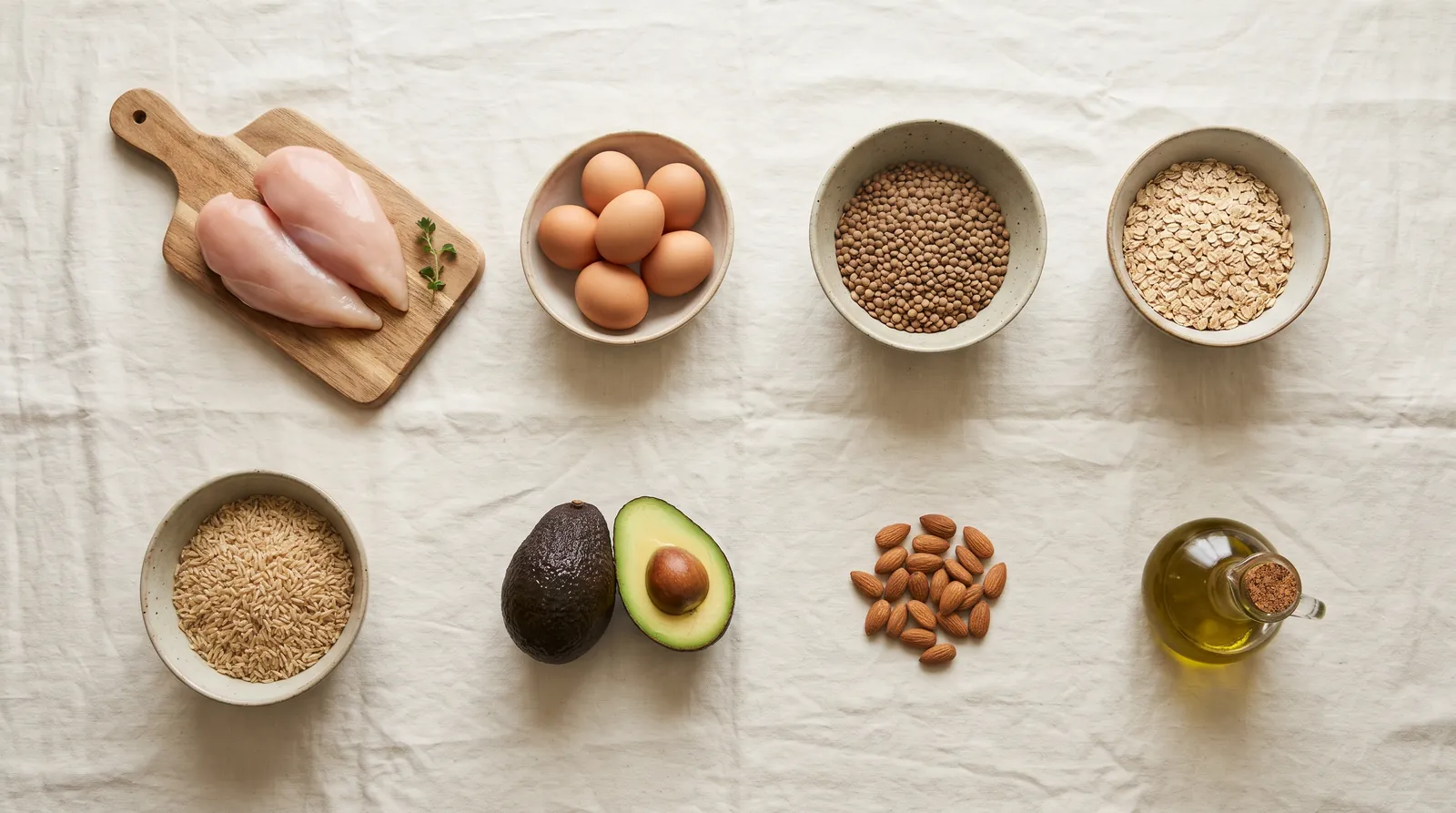
Where are the macronutrients located on a nutritional label?
On a U.S. Nutrition Facts label, the macronutrients sit in the middle, under Calories. You'll find Total Fat first (with saturated and trans fat under it), then Total Carbohydrate (with dietary fiber and sugars under it), then Protein. Each shows grams per serving, and most show a % Daily Value based on a 2,000-calorie diet. Each gram of them carries a set number of calories, explained in what is a calorie.
To track macros from a label, check the serving size at the top first. If you eat two servings, double every number. Our guide on how to read nutrition facts labels walks through every line.
Macros and micros
Macros are the nutrients you need in large amounts, measured in grams, and they give you energy. Micros, or micronutrients, are vitamins and minerals, needed in milligrams or micrograms, with no calories but plenty of jobs, from building bones to carrying oxygen. Hitting your macros with mostly whole foods, like vegetables, fruit, whole grains, beans, fish and dairy, usually takes care of the micros too. Hitting them with protein bars and shakes may not. Fiber is the one most people miss, so check yours with the daily fiber calculator.
Macro calculator FAQ
How do you calculate macros?
Start with your daily calories, pick a split such as 25% protein, 50% carbs and 25% fat, multiply calories by each percentage, then divide protein and carb calories by 4 and fat calories by 9 to get grams. At 2,000 calories that's 125 g protein, 250 g carbs and 56 g fat.
What is the best macro breakdown for fat loss?
The calorie deficit matters most. Within it, a higher protein share, around 30 to 35% of calories or about 1.6 g per kilogram of body weight, helps keep muscle and keeps you fuller. Carbs and fat can be split to suit what you like eating.
Do macros matter for weight loss?
Total calories decide whether you lose weight. Macros decide what that weight is: eating enough protein while losing weight helps you keep more muscle and lose more fat.
What are keto diet macros?
A typical ketogenic split is about 70 to 75% fat, 20% protein and 5% carbs, which usually keeps carbs to about 20 to 50 grams a day.
How much protein do I need?
The adult RDA is 0.8 grams per kilogram of body weight a day. People who lift weights or are losing weight do better with about 1.6 g/kg. In pregnancy and while breastfeeding, the recommendation is 71 grams a day.
Sources
- National Academies. Dietary Reference Intakes for Energy, Carbohydrate, Fiber, Fat, Fatty Acids, Cholesterol, Protein, and Amino Acids, 2005 (AMDR, protein RDA and needs in pregnancy and lactation).
- U.S. Departments of Agriculture and Health and Human Services. Dietary Guidelines for Americans, 2020–2025 (extra calories in pregnancy and lactation).
- Morton RW, Murphy KT, McKellar SR, et al. A systematic review, meta-analysis and meta-regression of the effect of protein supplementation on resistance training-induced gains in muscle mass and strength in healthy adults. Br J Sports Med, 2018;52:376–384.
- Mifflin MD, St Jeor ST, et al. A new predictive equation for resting energy expenditure in healthy individuals. Am J Clin Nutr, 1990.
- U.S. Food and Drug Administration. How to understand and use the Nutrition Facts label.
- U.S. Department of Agriculture. FoodData Central (protein in foods).