Short answerTo scale a recipe, multiply every amount by the same number: 0.5 to halve, 2 to double. The tricky part is the measuring. Half of ¾ cup is 6 tablespoons, half of ⅓ cup is 2 tablespoons plus 2 teaspoons, and half of 1 tablespoon is 1½ teaspoons. This recipe scaling calculator does that conversion for every line.
How to use the recipe doubler and scaler
- Paste or type your ingredients, one per line, with the amount first.
- Pick half, double, triple or quarter, or enter any multiplier. To use it as a recipe serving size converter, type the servings the recipe makes and the servings you want.
- Read the scaled list. Each line shows the new amount and what it was, so nothing gets lost.
- Copy the result into your notes or print it.
Use it as a cut recipe in half calculator for a small household, a recipe doubler calculator for holiday baking, or a multiply recipe calculator for a crowd. It's a recipe calculator and converter in one: a recipe ingredient calculator that reads whole numbers, decimals, fractions (1/2), mixed numbers (1 1/2), fraction characters (½) and ranges (2-3 cloves). It also understands both "tbsp" and "T", and "tsp" and "t".
Half a recipe calculator: common measures
When cutting recipes in half, a calculator saves you from guessing at these, the conversions people get stuck on most:
| Original | Half |
|---|---|
| 1 cup | ½ cup |
| ¾ cup | 6 tbsp |
| ⅔ cup | ⅓ cup |
| ½ cup | ¼ cup |
| ⅓ cup | 2 tbsp + 2 tsp |
| ¼ cup | 2 tbsp |
| 1 tbsp | 1½ tsp |
| 1 tsp | ½ tsp |
| ½ tsp | ¼ tsp |
These all come from the same three facts: 1 cup = 16 tablespoons, and 1 tablespoon = 3 teaspoons, so 1 cup = 48 teaspoons. The recipe cutter in half works everything out in teaspoons, then rounds to the nearest measure in a standard set of cups and spoons.
Recipe doubling calculator: what changes
| Original | Double |
|---|---|
| ¾ cup | 1½ cups |
| ⅔ cup | 1⅓ cups |
| ⅓ cup | ⅔ cup |
| ¼ cup | ½ cup |
| 1½ tbsp | 3 tbsp |
| 1½ tsp | 1 tbsp |
| ½ tsp | 1 tsp |
A recipe double calculator gets the ingredients right, but a few things don't scale in a straight line:
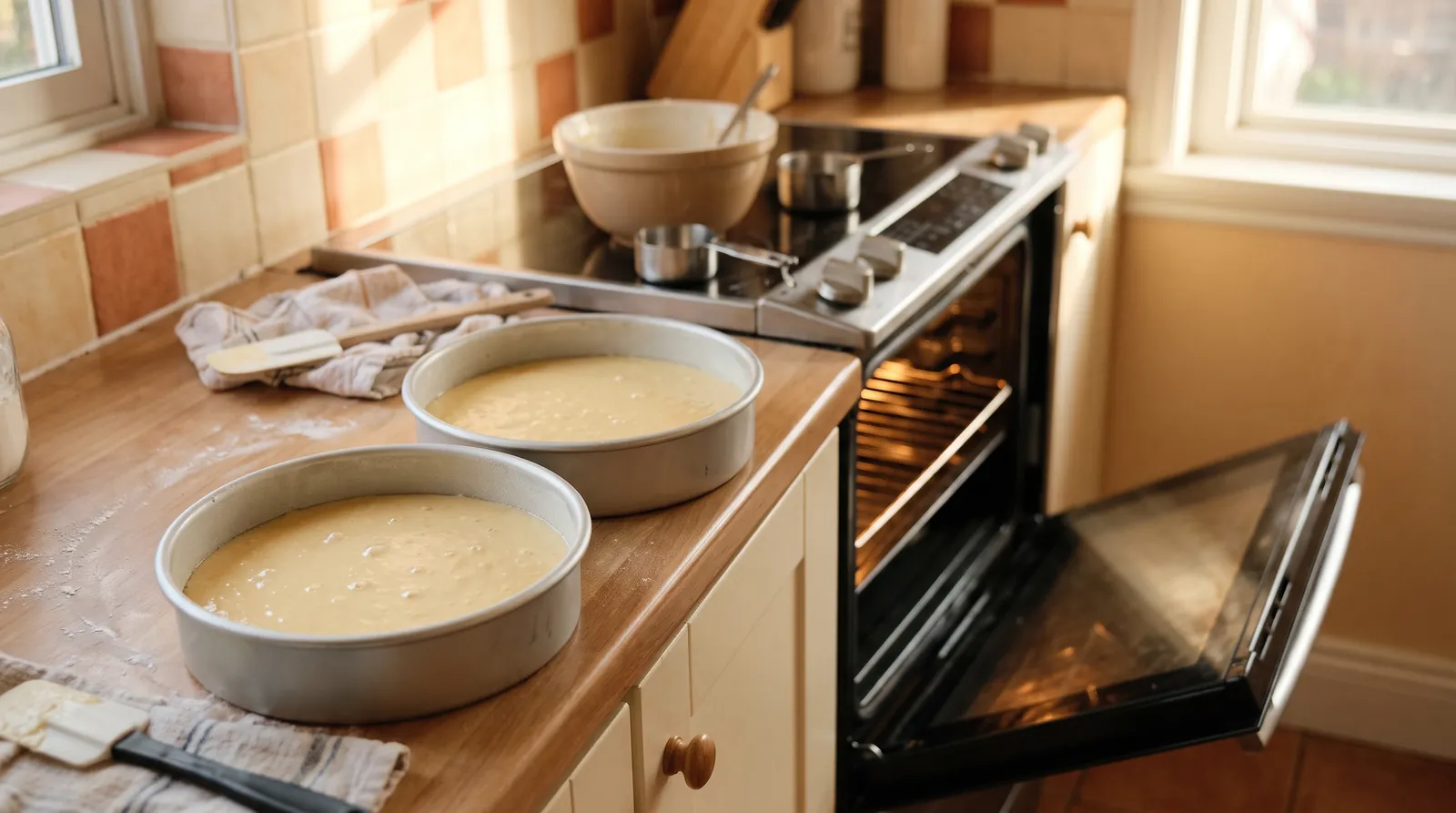
- Baking time. Don't double it. Bake in two pans of the original size at the same temperature. One bigger, deeper pan takes longer and can burn at the edges before the middle sets.
- Salt and strong spices. Start with about 1.5 times the original when doubling, taste, then add more.
- Leavening (baking soda and powder) scales fine for doubling in most home recipes. For four times or more, many bakers use a little less.
- Pan size for halving. An 8-inch square pan holds about half of a 9 × 13 pan.
How to halve an egg
Recipes rarely call for half an egg, but halving a recipe often does. Beat the egg in a cup and measure. A large egg is about 3 tablespoons, roughly 50 grams without the shell, so half is about 1½ tablespoons. The calculator flags any line where you'd end up with part of an egg or part of a can.
Recipe serving converter
The servings box works out the multiplier for you: new servings ÷ original servings. A recipe for 4 that you want for 6 gets multiplied by 1.5; for 10 by 2.5. This recipe resizer and recipe multiplier calculator applies that to every line at once, then tidies the measurements. If you need fewer servings, the same box works as a recipe reduce calculator.
Want the calories per serving too? Add the scaled ingredients to the recipe nutrition calculator for a per-serving total, then log it in the calorie counter. Once you know the new servings, the calorie converter can turn grams of protein, carbs and fat into calories. Our nutrition label maker can lay them out as a Nutrition Facts label. Cooking a holiday dinner for a crowd? Our Thanksgiving dinner calories guide lists each classic dish per serving.
Cups to grams: scale by weight for exact results
Cups are fine for most cooking, but baking is more forgiving when you weigh. If your recipe lists grams, the recipe doubler scales them exactly, with no fractions to round. If it uses cups, these USDA weights help you switch:
| Ingredient | 1 cup weighs about |
|---|---|
| All-purpose flour | 125 g |
| Granulated sugar | 200 g |
| Brown sugar, packed | 220 g |
| Butter | 227 g (2 sticks) |
| Milk | 244 g |
| Honey | 339 g |
| Rolled oats | 81 g |
Flour is the one to watch: scooped straight from the bag, a cup can weigh 150 g or more, which is why the same cookie recipe can come out dry at one house and perfect at another.
Pan sizes when you double or halve
Scaling the ingredients is half the job; the batter also has to fit the pan at the same depth. Compare pan areas:
| Pan | Area |
|---|---|
| 8-inch round | 50 sq in |
| 8 × 8-inch square | 64 sq in |
| 9-inch round | 64 sq in |
| 9 × 9-inch square | 81 sq in |
| 9 × 13-inch rectangle | 117 sq in |
| Half sheet, 13 × 18 inches | 234 sq in |
So a batch made for a 9 × 13 pan, halved, fits an 8 × 8 or a 9-inch round, and a doubled 9 × 13 recipe fills a half sheet. Keep the oven temperature the same and start checking a little early; a thinner layer bakes faster.
Recipe scaling FAQ
What is half of 3/4 cup?
6 tablespoons. Three-quarters of a cup is 12 tablespoons, so half is 6.
What is half of 1/3 cup?
2 tablespoons plus 2 teaspoons. A third of a cup is 16 teaspoons, so half is 8 teaspoons.
How do you halve an egg?
Beat the egg, then measure out half: a large egg is about 3 tablespoons (50 grams), so half is about 1 1/2 tablespoons.
Do you double the baking time when you double a recipe?
No. Use the same oven temperature and check early. Bake in two pans of the original size if you can; a single deeper pan needs more time and the edges may overbake.
Sources
- National Institute of Standards and Technology. Metric kitchen: cooking measurement equivalencies (cups, tablespoons, teaspoons).
- U.S. Department of Agriculture. FoodData Central (weight of a large egg).