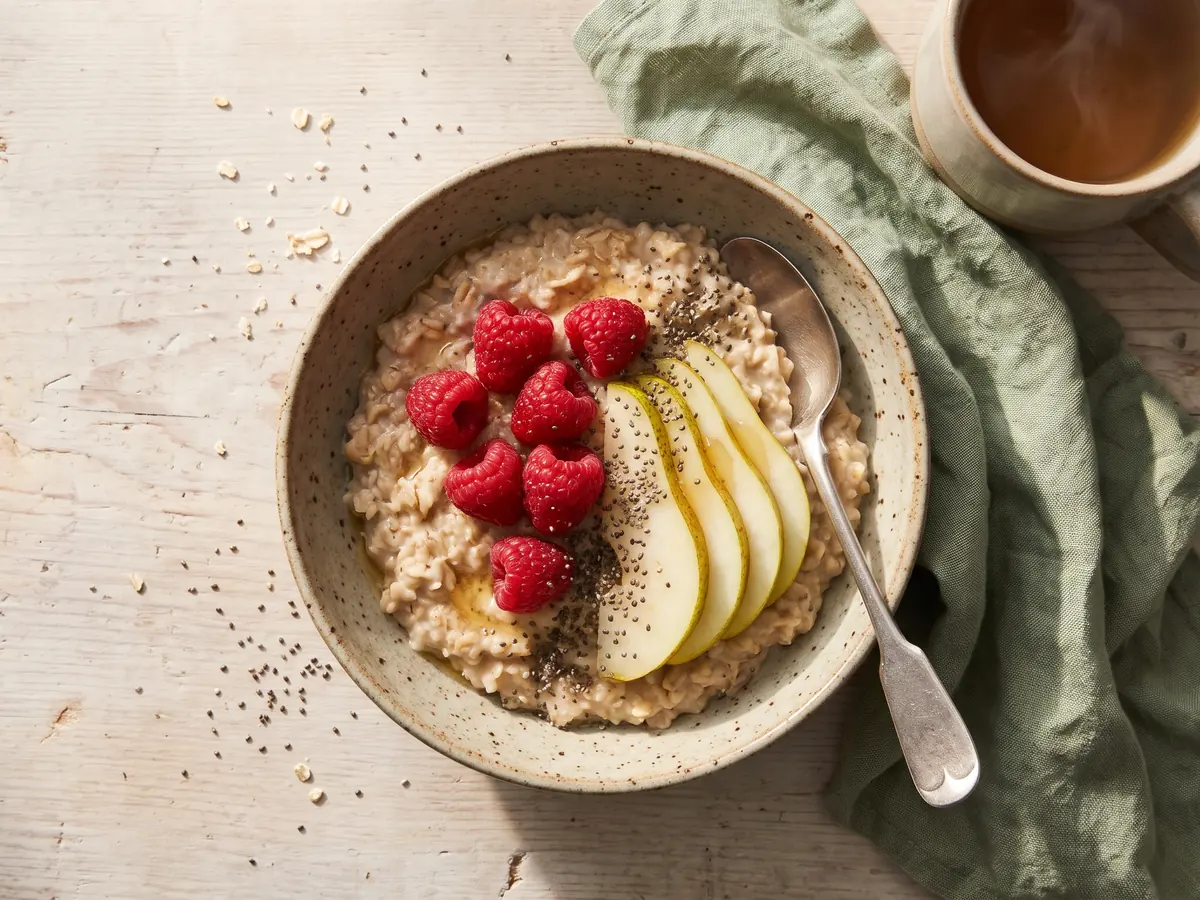
Short answerAdults need about 25 grams of fiber a day (women 19 to 50) or 38 grams (men 19 to 50), dropping to 21 and 30 grams after 50. That's 14 grams for every 1,000 calories. One cup of cooked lentils alone gives about 16 grams.
How much fiber do you need a day?
The National Academies set an Adequate Intake for dietary fiber of 14 grams per 1,000 calories, based on studies of heart health. This dietary fiber calculator turns that into grams for you:
| Age | Women | Men |
|---|---|---|
| 19 to 50 | 25 g | 38 g |
| 51 and older | 21 g | 30 g |
The Daily Value on food labels is 28 grams, a single figure for a 2,000-calorie diet. Pick "By my calories" in the fiber intake calculator if your calories are well above or below that. At 2,500 calories, for example, your target is 35 grams.
Most people fall short. The Dietary Guidelines for Americans report that more than 90% of women and 97% of men don't reach the recommended amount.
Fiber calculator for food: the best sources
The food counter in the calculator covers 30 common foods. These give the most fiber per usual portion:
| Food | Portion | Fiber |
|---|---|---|
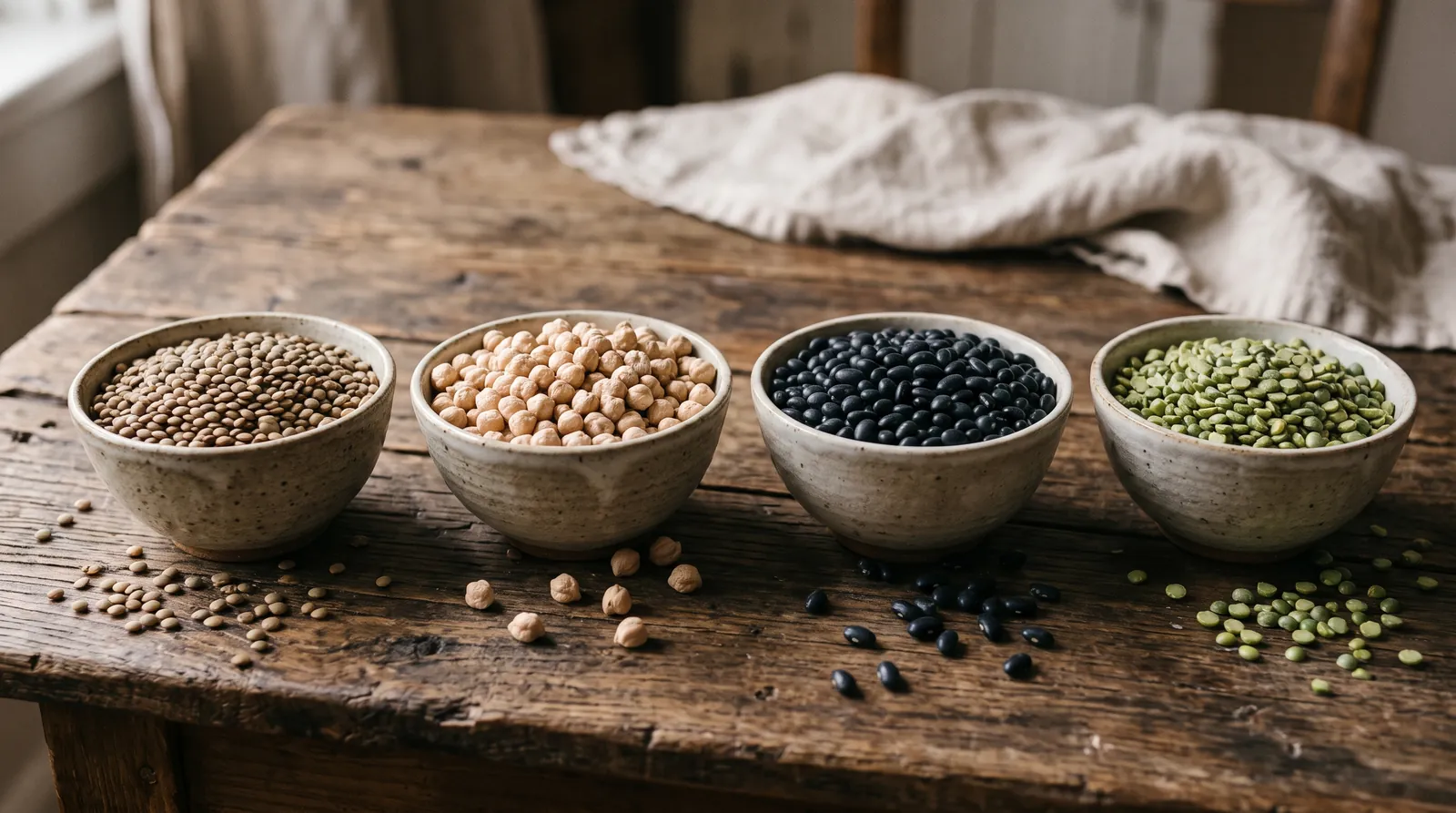
| Split peas | 1 cup cooked | 16.3 g |
| Lentils | 1 cup cooked | 15.6 g |
| Black beans | 1 cup cooked | 15.0 g |
| Chickpeas | 1 cup cooked | 12.5 g |
| Chia seeds | 1 oz (2 tbsp) | 9.8 g |
| Green peas | 1 cup cooked | 8.8 g |
| Raspberries | 1 cup | 8.0 g |
| Whole-wheat pasta | 1 cup cooked | 6.0 g |
| Pear | 1 medium | 5.5 g |
| Bran flakes | ¾ cup | 5.5 g |
| Quinoa | 1 cup cooked | 5.2 g |
| Broccoli | 1 cup cooked | 5.1 g |
| Apple, with skin | 1 medium | 4.4 g |
| Oatmeal | 1 cup cooked | 4.0 g |
Swaps matter too. A cup of brown rice has about 3.5 grams of fiber against 0.6 for white rice, and a slice of whole-wheat bread about 1.9 against 0.7 for white.
What a high-fiber day looks like
Hitting 25 grams is easier than it sounds:
- Breakfast: 1 cup of oatmeal with a banana (7.1 g)
- Lunch: a bowl with 1 cup of black beans (15 g)
- Dinner: 1 cup of broccoli on the side (5.1 g)
That's 27.2 grams. Try your own day in the daily fiber calculator above. For 38 grams, add an apple, an ounce of almonds and two slices of whole-wheat toast, for a total of about 38.9. Two clementines or Cuties as a snack add another 2.6 g.
Soluble and insoluble fiber
Fiber comes in two kinds, and most plant foods have both. Soluble fiber, found in oats, beans, apples and chia, turns into a gel in your gut. It slows digestion and helps lower LDL cholesterol, one reason oats and beans feature in a heart-healthy diet. Insoluble fiber, found in wheat bran, whole grains and vegetable skins, adds bulk and keeps things moving. You don't need to count them separately; eating a mix of beans, fruit, vegetables and whole grains covers both, the same balance the UK's eat well plate recommends.
How much fiber per day to lose weight?
There's no separate fiber target for weight loss, so any calculator for how much fiber per day to lose weight should give you the usual 25 to 38 grams. But fiber helps. In one study of adults on calorie-reduced diets, fiber intake predicted both weight loss and how well people stuck to their diet, regardless of the diet's mix of protein, carbs and fat. High-fiber foods are filling for few calories: a cup of raspberries has about 64 calories and 8 grams of fiber. The lowest calorie fruits list ranks the rest by calories and fiber.
Use the fiber calculator to keep fiber up while you cut calories, and pair it with the macro calculator to plan a day that's both filling and on target. Fiber is one part of carbohydrate, one of the six essential nutrients your body needs from food.
How to add fiber without discomfort
- Increase by a few grams a day over a week or two, not all at once.
- Drink more water. Fiber needs it to work well.
- Spread fiber across meals instead of one huge serving.
- Food first; supplements like psyllium can help, but they don't bring the vitamins and minerals that come with whole foods.
Fiber on food labels
The Nutrition Facts label lists dietary fiber under total carbohydrate, with a % Daily Value based on 28 grams. Two claims are worth knowing: For the rest of the panel, see how to read a nutrition facts label.
- "High fiber" or "excellent source of fiber": at least 20% of the Daily Value per serving, about 5.6 grams.
- "Good source of fiber": 10 to 19% of the Daily Value, about 2.8 to 5.3 grams.
Compare breads and cereals by grams per serving rather than by the words on the front: "multigrain" and "made with whole grains" don't promise much fiber. If you make food to share or sell, the nutrition label maker works out the fiber % Daily Value for you, and the recipe nutrition calculator adds up the fiber in a homemade dish.
Fiber and fat targets tend to move in opposite directions on the same plate: beans and vegetables bring fiber with very little fat. A cup of chopped carrots, for example, has 3.6 grams of fiber and almost no fat. The fat intake calculator covers the other side, and the calorie counter keeps a running total of your day.
Fiber FAQ
How much fiber do I need a day?
About 25 grams for women and 38 grams for men aged 19 to 50, and 21 and 30 grams after 50. Another way to put it: 14 grams for every 1,000 calories you eat.
What foods have the most fiber?
Beans, lentils and split peas lead, with 11 to 16 grams per cooked cup. Raspberries, pears, green peas, chia seeds, whole-wheat pasta and bran cereal are also high.
How much fiber per day to lose weight?
There's no separate weight loss target. Aim for the usual 25 to 38 grams a day. In a study of people on calorie-reduced diets, those who ate more fiber lost more weight and stuck to their diet better.
Can you eat too much fiber?
Adding a lot at once can cause gas, bloating and cramps. Increase by a few grams a day over a couple of weeks and drink plenty of water.
Sources
- National Academies. Dietary Reference Intakes for Energy, Carbohydrate, Fiber, Fat, Fatty Acids, Cholesterol, Protein, and Amino Acids: dietary, functional and total fiber, 2005.
- U.S. Departments of Agriculture and Health and Human Services. Dietary Guidelines for Americans, 2020–2025, including the list of food sources of dietary fiber.
- U.S. Department of Agriculture. FoodData Central (fiber per portion).
- Miketinas DC, Bray GA, Beyl RA, et al. Fiber intake predicts weight loss and dietary adherence in adults consuming calorie-restricted diets: the POUNDS Lost study. J Nutr, 2019;149(10):1742–1748.