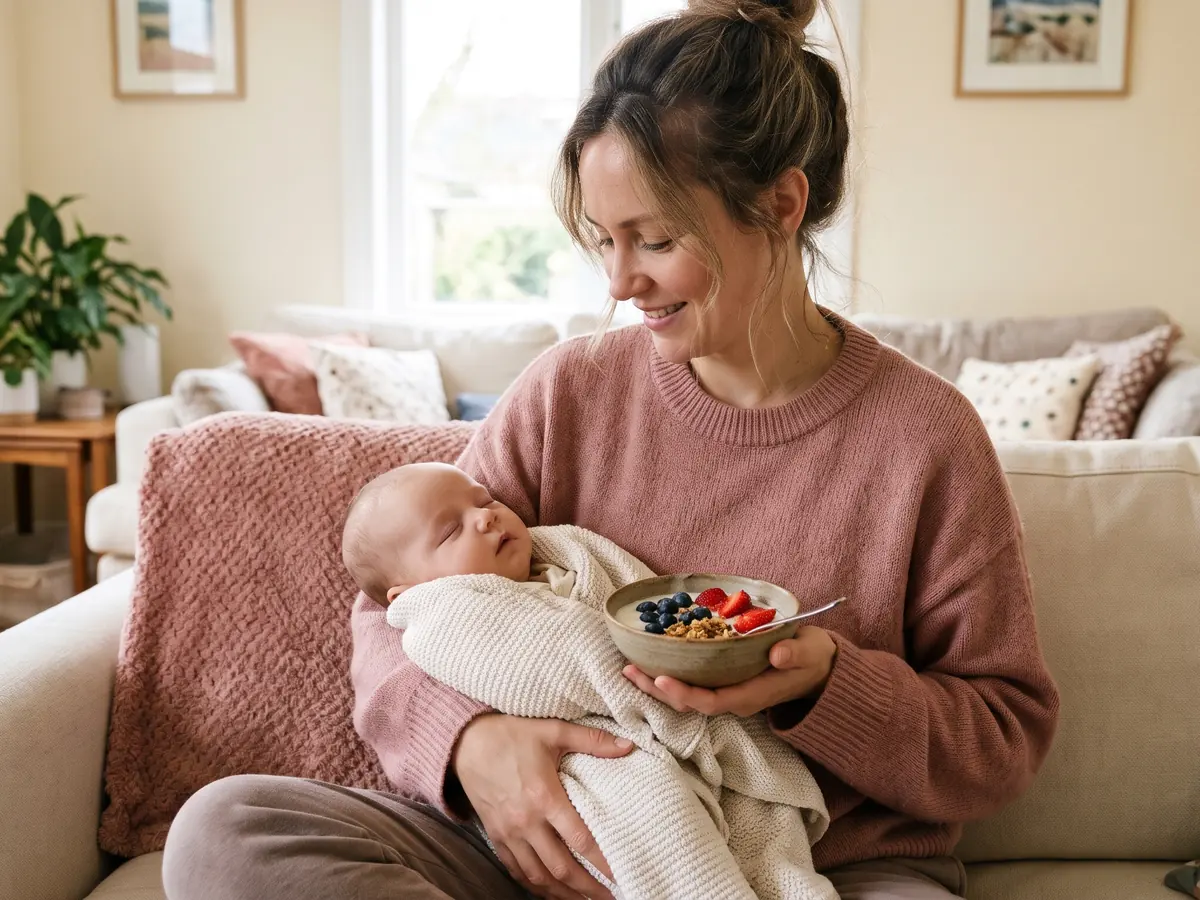
Short answerIf you're exclusively breastfeeding, you need about 330 extra calories a day in the first 6 months and 400 from 6 to 12 months, on top of your usual needs. For a 30-year-old woman who's 5'5", 165 pounds and lightly active, that's about 2,350 calories a day to keep her weight steady, or about 2,100 to lose half a pound a week.
How many calories does breastfeeding need?
Making milk takes energy. The CDC and the Dietary Guidelines for Americans both suggest about 330 to 400 extra calories a day for well-nourished, exclusively breastfeeding mothers, compared with what you ate before pregnancy:
| Baby's age | Only breast milk | Breast milk and formula |
|---|---|---|
| 0 to 6 months | +330 a day | about +165 |
| 6 to 12 months | +400 a day | about +200 |
The "breast milk and formula" column is an estimate for about half of feeds from formula; the more your baby nurses, the closer you get to the full amount. Exclusive pumping counts as breastfeeding.
This calculator for breastfeeding calories starts from your own needs. It uses the Mifflin-St Jeor equation, the same base as our TDEE calculator, then adds the milk calories. So it works as a TDEE calculator for breastfeeding too.
Breastfeeding weight loss calculator
Many mothers want to lose the weight gained in pregnancy, and it's possible while breastfeeding if you go slowly. In a study of overweight breastfeeding mothers, losing about 1 pound a week through diet and exercise, starting at about 4 weeks after birth, didn't affect their babies' growth. Crash diets are a different story: cutting too much can reduce your milk supply.
As a breastfeeding calorie deficit calculator, the tool offers two speeds:
- ½ lb a week: 250 calories under your needs. The gentlest option.
- 1 lb a week: 500 under. The upper end of what's considered safe.
It also holds back any deficit with a newborn under 2 months, when your milk supply is still settling, and it won't go below 1,800 calories a day while you're breastfeeding. Our example mother eats about 2,100 calories to lose half a pound a week, or 1,850 to lose a pound.
Postpartum calorie calculator: not breastfeeding
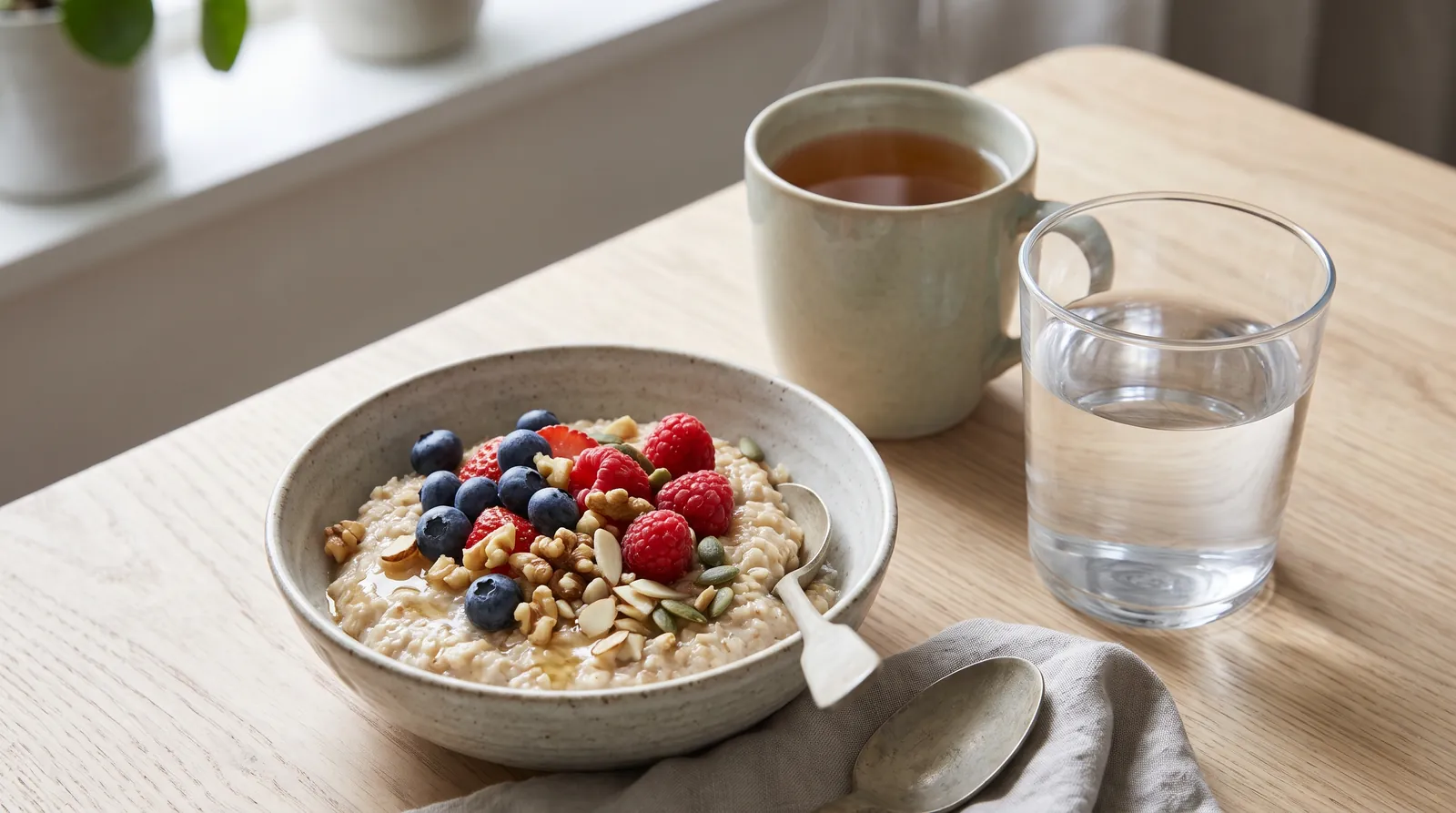
If you're not breastfeeding, pick "Not breastfeeding" and the calculator becomes a postpartum calorie calculator: no milk calories, just your own needs, minus a gentle deficit if you want one. Recovery from birth still takes energy, so slow and steady remains the best approach.
What to eat while breastfeeding
- Protein: about 71 grams a day while breastfeeding, up from 46 for most women.
- Fluids: about 3.8 liters of total water a day from drinks and food. Keep a glass nearby when you nurse and drink to thirst.
- Fish: 2 to 3 servings a week of low-mercury fish, like salmon or sardines, for omega-3 fats.
- Keep taking your prenatal vitamin if your doctor recommended one, and limit caffeine to about 2 to 3 cups of coffee a day.
Calorie needs vary a lot. If you're often hungry, losing weight faster than 1 pound a week, or notice your supply dropping, eat more and talk to a lactation consultant.
A day of eating while breastfeeding
Around 2,300 calories, the example mother's maintenance while nursing, usually looks like three meals and two snacks rather than anything special:
- Breakfast: oatmeal with milk, a banana and a spoon of peanut butter
- Snack: Greek yogurt with berries
- Lunch: a whole-grain wrap with chicken or beans, salad and an olive oil dressing
- Snack: an apple and a handful of almonds
- Dinner: salmon or tofu, rice or potatoes, and a big serving of vegetables
That pattern covers the 71 grams of protein comfortably. To see it in grams of protein, carbs and fat, use the breastfeeding option in the macro calculator. Keep fiber up too, which helps with postpartum constipation; the fiber calculator shows how close a day gets. If you'd like to check a few real days, the free calorie counter keeps the log in your browser. For a full week of menus near this level, our 2000 calorie meal plan shows how to add about 100 calories a day for a 2,100 version.
Caffeine and alcohol while breastfeeding
The CDC considers up to about 300 mg of caffeine a day, roughly 2 to 3 cups of coffee, a low to moderate amount for breastfeeding mothers. Newborns and premature babies clear caffeine more slowly, so less is wiser early on. Not drinking alcohol is the safest choice. If you do drink, up to one standard drink a day isn't known to harm the baby, and waiting about 2 hours per drink before nursing lets most of it clear.
Getting active again after birth
ACOG recommends working back up to at least 150 minutes a week of moderate activity, such as brisk walking, after having a baby. After an uncomplicated vaginal birth that can start within days, as soon as you feel ready; after a cesarean, usually within 4 to 6 weeks, once your doctor or midwife agrees. Walking with the stroller is a great start, and the walking calorie calculator shows what each outing burns. Exercise doesn't reduce milk supply when you eat and drink enough to match it.
Breastfeeding calories FAQ
How many extra calories do you need when breastfeeding?
About 330 extra calories a day in the first 6 months and 400 from 6 to 12 months, on top of what you needed before pregnancy, if you're exclusively breastfeeding. Less if your baby also has formula.
Can I lose weight while breastfeeding?
Yes, gradually. Losing about 1 pound a week, once your milk supply is established, hasn't been shown to affect a baby's growth. Avoid crash diets, which can reduce milk supply.
When can I start a calorie deficit after giving birth?
Many experts suggest waiting until about 6 to 8 weeks after birth, once breastfeeding is going well. Check with your doctor or midwife first.
How much water should I drink while breastfeeding?
The adequate intake for breastfeeding women is about 3.8 liters of total water a day, from drinks and food. Drinking to thirst usually covers it.
Sources
- Centers for Disease Control and Prevention. Maternal diet and breastfeeding.
- U.S. Departments of Agriculture and Health and Human Services. Dietary Guidelines for Americans, 2020–2025 (calories during lactation).
- Centers for Disease Control and Prevention. Alcohol and breastfeeding.
- American College of Obstetricians and Gynecologists. Exercise after pregnancy.
- Lovelady CA, Garner KE, Moreno KL, Williams JP. The effect of weight loss in overweight, lactating women on the growth of their infants. N Engl J Med, 2000;342(7):449–453.
- National Academies. Dietary Reference Intakes for Water, Potassium, Sodium, Chloride, and Sulfate (water during lactation); protein during lactation.