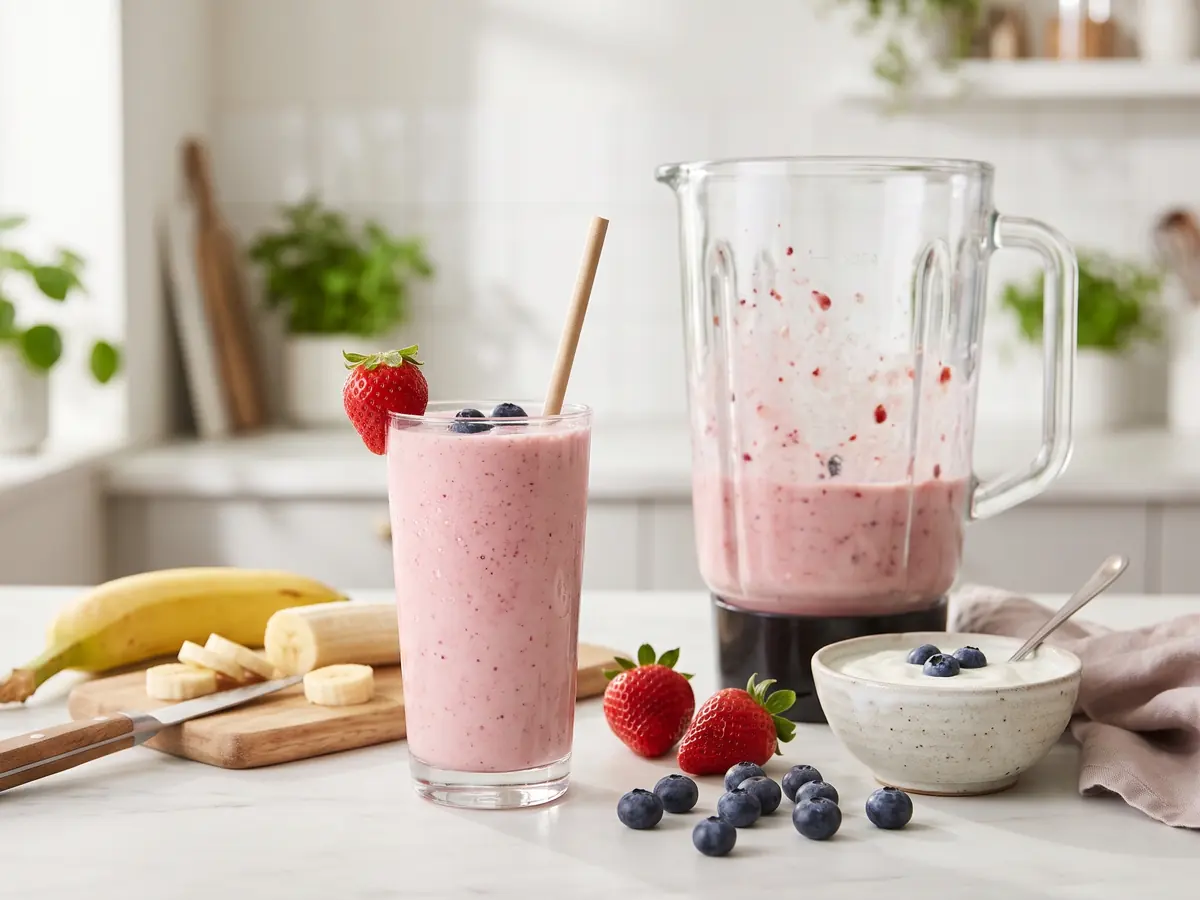
Short answerTo find the nutrition of a recipe, add up each ingredient's calories and nutrients, then divide by the number of servings. A homemade berry smoothie with a banana, a cup of berries, Greek yogurt, milk and honey comes to about 400 calories and 24 grams of protein. A chicken salad with feta and an olive oil dressing is about 390.
How to count calories in homemade food
Learning how to count calories with homemade food takes a few minutes the first time, then it's routine:
- List every ingredient, including oil for the pan and any dressing.
- Measure or weigh it. A kitchen scale is the most accurate; cups and spoons are fine for most things.
- Look up the nutrition for each. This calculator has USDA values built in for about 40 common ingredients.
- Add it all up for the whole recipe.
- Divide by servings. For a big batch, weigh the finished dish and divide by the weight of your portion.
That's a full recipe analysis, a food ingredient analysis for one dish. To analyze your whole diet, do the same for each meal across a few days. The calculator does steps 3 to 5 as you type, and shows which ingredient brings the most calories, usually the oil, nut butter or cheese.
Smoothie calorie calculator
Smoothies are easy to underestimate because they're quick to drink. As a smoothie nutrition calculator, the tool shows the calories in a smoothie ingredient by ingredient:
| Ingredient | Portion | Calories |
|---|---|---|
| Orange juice | 1 cup | 112 |
| Banana | 1 medium | 105 |
| Greek yogurt, plain nonfat | ¾ cup | 100 |
| Peanut butter | 1 tbsp | 94 |
| Honey | 1 tbsp | 64 |
| Chia seeds | 1 tbsp | 58 |
| Blueberries | ½ cup | 42 |
| Almond milk, unsweetened | 1 cup | 36 |
| Spinach | 1 cup | 7 |
The two example smoothies in the calculator come to about 400 calories (berry, with 24 g of protein from the yogurt) and 360 calories (green, with 11 g of fiber from chia and spinach). Swap juice for water or unsweetened almond milk to save 75 to 100 calories without changing the size.
Salad calorie calculator
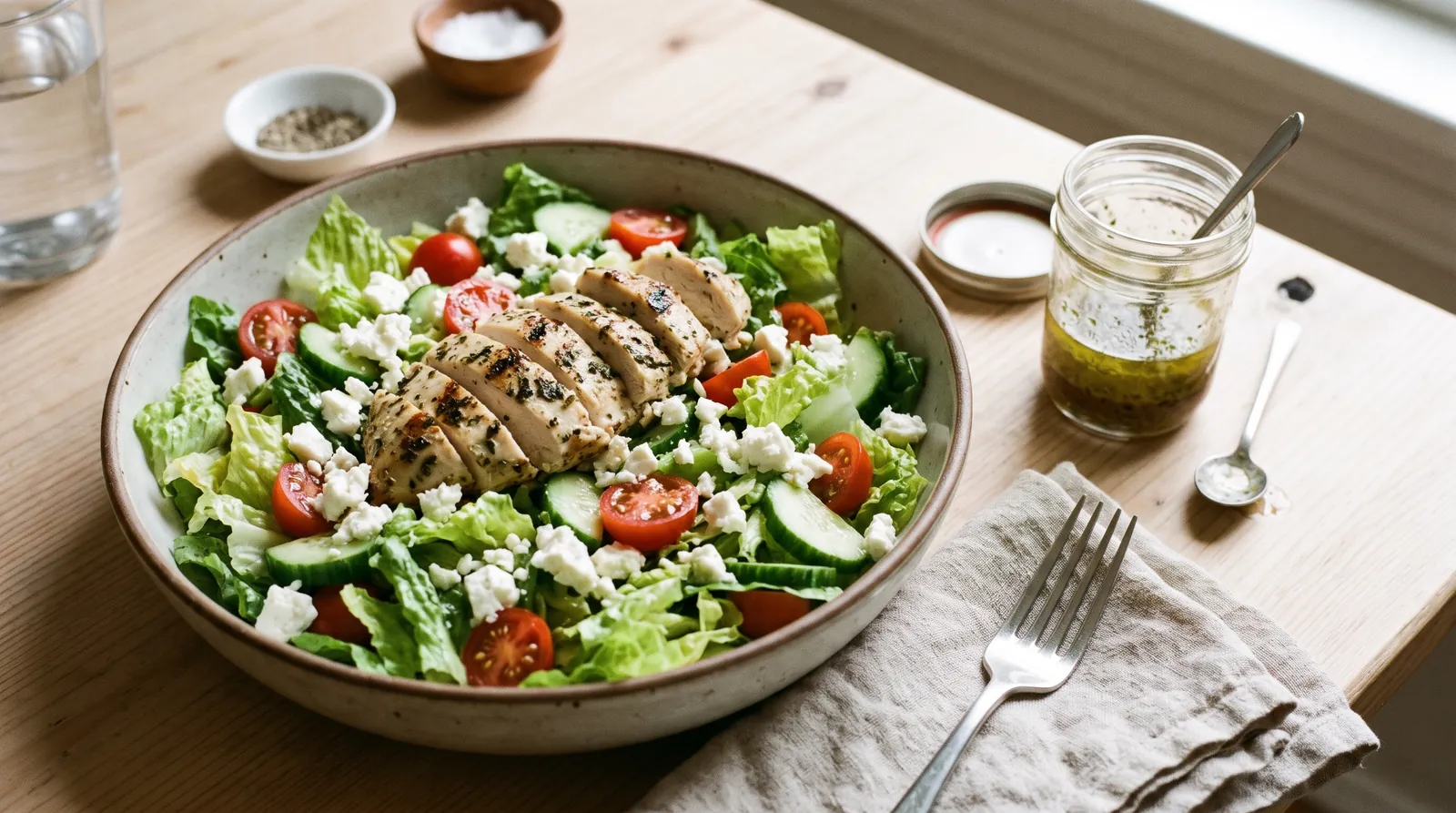
A salad's calories live in the toppings, not the greens. Two cups of romaine have about 16 calories. Then:
- 1 tablespoon of olive oil adds about 119
- 1 ounce of almonds, about 162
- ½ avocado, about 109
- 1 ounce of feta, about 74
- 3 ounces of cooked chicken breast, about 140 (and 26 g of protein)
The example chicken salad in the calculator comes to about 390 calories with 33 g of protein, and a third of those calories are the olive oil. That's fine, as olive oil is a healthy fat, but it's worth measuring rather than pouring.
From recipe to nutrition label
Making something to sell or share? Tap "Make a nutrition label" and the per-serving calories, fat, carbs, fiber and protein carry over to our nutrition label maker. Add sodium, sugars and the rest from your ingredients' packages and you can calculate nutrition facts for a full label.
Compare nutritional information between versions too: change one ingredient and watch the totals move. For grams-to-calorie math on its own, see the calorie converter, and to size a recipe up or down first, use the recipe scaler. For holiday dishes already worked out per serving, see Thanksgiving meal calories.
How the recipe nutrition calculator works
Each ingredient in the list has USDA values per 100 grams: calories, protein, carbohydrate, fat and fiber. When you pick an amount, the calculator converts it to grams using a standard household portion, such as 1 medium banana at 118 g or 1 tablespoon of olive oil at 13.5 g. Then it scales the nutrients, adds every line, and divides by your servings. For counted examples, see our 800 calorie meals.
The donut shows where the calories come from, split by protein, carbs and fat. If you're aiming for a particular balance, compare it with your targets from the macro calculator. Bowls built on beans, oats or whole grains also score well on fiber; check the total against your daily target with the fiber calculator.
Raw or cooked weights?
Cooking changes weight, not calories. Rice and pasta soak up water, while meat loses some, so measure the way the food is listed:
- Rice: 1 cup of dry long-grain rice makes about 3 cups cooked. The list uses cooked rice.
- Pasta: 2 ounces dry makes about 1 cup cooked. The list uses cooked pasta.
- Chicken: raw breast loses roughly a quarter of its weight when roasted, so 4 ounces raw ends up near 3 ounces cooked. The list uses cooked chicken.
- Oats: the list uses dry rolled oats, the way you'd measure them into a smoothie or a bowl.
How accurate is it?
The ingredient values are averages from USDA FoodData Central. Real foods vary: a "medium" banana can be 100 or 140 grams, and brands of yogurt or bread differ. For the closest numbers, switch lines to grams and weigh your ingredients, or use the Nutrition Facts on the packages you actually used. Cooking doesn't remove calories, but it changes weight: 100 g of dry rice becomes about 300 g cooked, so always match raw or cooked values to how you measured.
Recipe nutrition FAQ
How do you count calories in homemade food?
Weigh or measure each ingredient, look up its calories, add them up for the whole recipe, then divide by the number of servings. A recipe nutrition calculator does the lookups and the math for you.
How many calories are in a smoothie?
Usually 250 to 450 for a homemade smoothie. A banana, a cup of berries, ¾ cup of Greek yogurt, half a cup of milk and a tablespoon of honey come to about 400 calories.
Why are salads sometimes so high in calories?
The dressing and toppings. Two cups of lettuce have about 16 calories, but a tablespoon of olive oil adds about 120, and cheese, nuts and croutons add more.
Sources
- U.S. Department of Agriculture, Agricultural Research Service. FoodData Central (ingredient nutrients and household portions).
- U.S. Food and Drug Administration. How to understand and use the Nutrition Facts label.