Short answerChocolate has about 535 to 600 calories per 100 g. One ounce (28 g) of 70-85% dark chocolate has 170 calories, milk chocolate 152 and white chocolate 153. A standard 1.55 oz milk chocolate bar has about 235 calories and 23 g of sugar.
How many calories in chocolate?
Chocolate is energy dense because it's mostly fat and sugar. Here are chocolate calories by type, from USDA FoodData Central:
| Chocolate | Calories | Fat | Carbs | Sugar | Fiber |
|---|---|---|---|---|---|
| Dark, 70-85% cacao | 170 | 12.1 g | 13.0 g | 6.8 g | 3.1 g |
| Dark, 60-69% cacao | 164 | 10.9 g | 14.9 g | 10.4 g | 2.3 g |
| Milk chocolate | 152 | 8.4 g | 16.8 g | 14.6 g | 1.0 g |
| White chocolate | 153 | 9.1 g | 16.8 g | 16.7 g | 0.1 g |
So how many calories are in chocolate? Per 100 g, chocolate kcal values are 598 for 70-85% dark, 579 for 60-69% dark, 535 for milk chocolate and 539 for white. Dark chocolate has slightly more calories than milk chocolate because it has more fat (42.6 g against 29.7 g per 100 g), but it has far less sugar.
Milk chocolate calories
How many calories are in milk chocolate? 535 per 100 g, 152 per ounce, and about 37 in a 7 g miniature bar. Milk chocolate also brings 189 mg of calcium per 100 g from the milk solids, more than dark chocolate.
How many calories in a chocolate bar?
That depends on the size printed on the wrapper. USDA lists these chocolate bar sizes:
- Miniature milk chocolate bar (7 g): about 37 calories
- Standard milk chocolate bar (1.55 oz, 44 g): about 235 calories and 22.7 g of sugar
- White chocolate bar (3 oz, 85 g): about 458 calories
- Dark chocolate bar, 70-85% (101 g): about 604 calories
How many calories is in a chocolate bar of another size? Multiply the grams by 5.35 for milk chocolate or by 6 for 70-85% dark, or enter the grams in the calculator. That's how to find choc bar calories for any brand.
Chocolate bar nutrition facts
The nutrition label for chocolate lists a serving size in grams, often less than the whole bar. Check how many servings are in the package and multiply. The nutrition label maker shows how a label like that is built, if you're making your own chocolate treats.
Does chocolate have carbs?
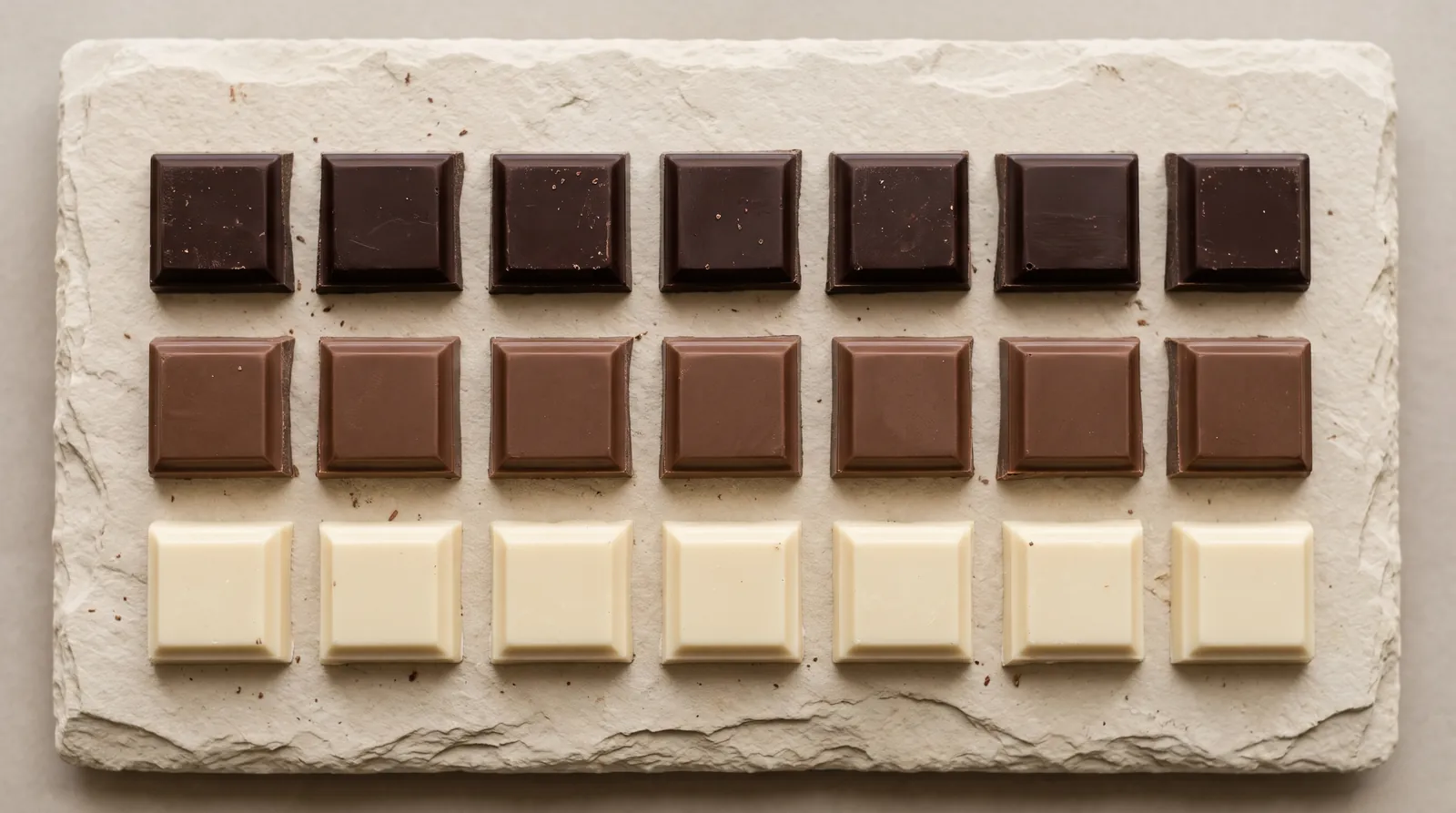
Yes. Does chocolate contain carbohydrates in every form? Yes, from sugar and, in dark chocolate, from cocoa fiber. Milk chocolate has 59.4 g of carbs per 100 g, nearly all sugar. White chocolate is almost pure sugar and fat, with 59.2 g of carbs and almost no fiber.
Dark chocolate and carbs
How many carbohydrates in dark chocolate? 70-85% dark chocolate has 45.9 g of carbs per 100 g, including 10.9 g of fiber, so about 35 g of net carbs. One ounce has 13 g of carbs and about 10 g net. Does dark chocolate have carbs low enough for keto? One square of 10 g has about 3.5 g of net carbs, so a square or two can fit. Lower-cacao dark chocolate (60-69%) has more: 52.4 g of carbs per 100 g.
Does chocolate contain sugar?
Yes, all chocolate has sugar unless it's unsweetened baking chocolate. Sugar in chocolate per ounce: 6.8 g in 70-85% dark, 10.4 g in 60-69% dark, 14.6 g in milk and 16.7 g in white chocolate. The higher the cacao percentage, the less room there is for sugar. If you're after something sweet with far fewer calories, a cup of strawberries has 49 (see the lowest calorie fruits). For cutting back on sweets in general, the 14-day no sugar diet has a food list and meal plan.
Fat in chocolate
Fat is where most chocolate calories come from: 42.6 g per 100 g in 70-85% dark, 29.7 g in milk chocolate and 32.1 g in white chocolate. Most of it is saturated fat from cocoa butter: one ounce of dark chocolate has 6.9 g of saturated fat, about a third of the 20 g Daily Value. The fat intake calculator shows how that fits your day, and our guide to food good for the heart explains why saturated fat matters.
Dark chocolate: iron, fiber and caffeine
70-85% dark chocolate has more than calories going for it: 11.9 mg of iron per 100 g (3.4 mg per ounce, 19% of the Daily Value), 10.9 g of fiber and 715 mg of potassium. It also has some caffeine, about 80 mg per 100 g or 23 mg per ounce, against 6 mg per ounce in milk chocolate and none in white.
Chocolate serving size
Chocolate grams add up quickly, so the easiest way to keep track is to weigh it. To find one square, divide the bar's weight by its number of squares; a 10 g square of 70-85% dark chocolate has about 60 calories. Snapping off a few squares and putting the bar away works better than eating from the wrapper. Log what you eat in the calorie counter, and check your daily target with the TDEE calculator. Sweet drinks count too: a 12 oz can of cola has nearly as many calories as an ounce of dark chocolate (see water and drink calories).
Chocolate FAQ
How many calories are in chocolate?
Chocolate has 535 to 600 calories per 100 g. One ounce (28 g) has about 170 calories for 70-85% dark chocolate, 152 for milk chocolate and 153 for white chocolate, based on USDA data.
How many calories are in a chocolate bar?
A 1.55 oz (44 g) milk chocolate bar has about 235 calories. A 101 g bar of 70-85% dark chocolate has about 604 calories. Always check the bar's size on its label.
Does chocolate have carbs?
Yes. Milk chocolate has 59.4 g of carbs per 100 g, mostly sugar. Dark chocolate with 70-85% cacao has 45.9 g, including 10.9 g of fiber, so about 35 g of net carbs per 100 g.
How much sugar is in chocolate?
Per ounce: about 6.8 g in 70-85% dark chocolate, 10.4 g in 60-69% dark, 14.6 g in milk chocolate and 16.7 g in white chocolate.
Does dark chocolate have caffeine?
Yes, a little. USDA lists about 80 mg of caffeine per 100 g of 70-85% dark chocolate, or about 23 mg per ounce. Milk chocolate has about 6 mg per ounce, and white chocolate none.
Sources
- U.S. Department of Agriculture, FoodData Central (SR Legacy): chocolate, dark, 70-85% cacao solids (170273); chocolate, dark, 60-69% cacao solids (170272); candies, milk chocolate (167587); candies, white chocolate (167571).
- U.S. Food and Drug Administration. Daily Value on the Nutrition and Supplement Facts Labels (saturated fat 20 g, iron 18 mg).