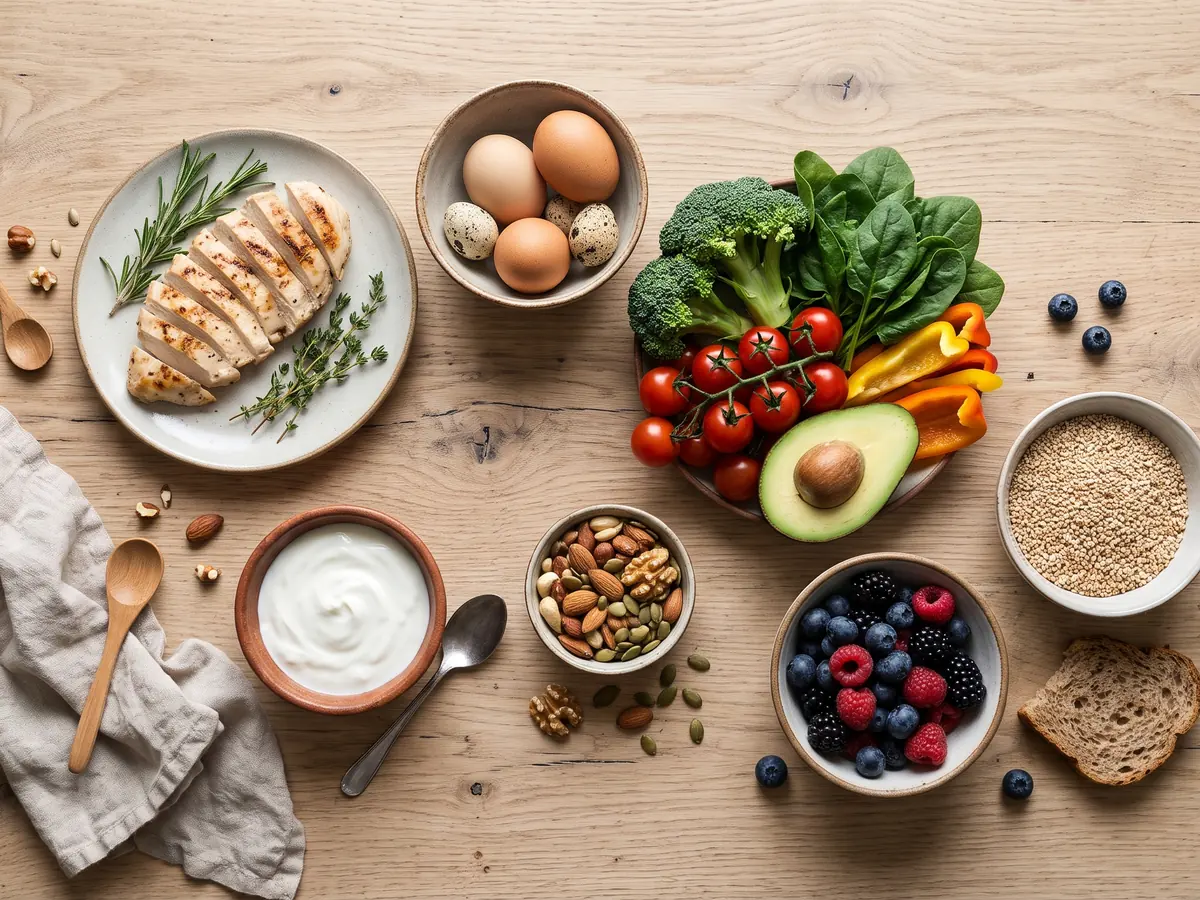
Short answerFor 14 days, cut added sugars: sweets, sugary drinks, sweetened yogurt and cereal, syrups, honey and juice concentrates. Eat vegetables, whole fruit, plain dairy, eggs, meat, fish, beans, nuts, whole grains and olive oil. The 2025–2030 Dietary Guidelines say no amount of added sugar is recommended, and the 14-day plan below has none, while averaging about 1,600 calories, 107 g of protein and 42 g of fiber a day.
In this article
What "no sugar" means
There are two kinds of sugar in food. Naturally occurring sugars are part of whole foods: fructose in fruit, lactose in milk. Added sugars are put in during processing or cooking. FDA defines added sugars as "sugars that are added during the processing of foods (such as sucrose or dextrose), foods packaged as sweeteners (such as table sugar), sugars from syrups and honey, and sugars from concentrated fruit or vegetable juices."
A no sugar diet targets the second kind. That's also where the guidance points. The Dietary Guidelines for Americans, 2025–2030 say "no amount of added sugars or non-nutritive sweeteners is recommended or considered part of a healthy or nutritious diet," and that "one meal should contain no more than 10 grams of added sugars." They also advise avoiding sugar-sweetened beverages "such as sodas, fruit drinks, and energy drinks." The FDA Daily Value for added sugars is 50 g a day.
So whole fruit, vegetables, plain milk and plain yogurt stay on the menu. Their sugar comes packaged with fiber, water, protein or other nutrients. What goes is the sugar added on top.
14-day no sugar diet food list
| Group | Eat | Limit or check the label | Avoid for 14 days |
|---|---|---|---|
| Vegetables | All fresh and frozen vegetables | Canned vegetables and sauces with added sugar | Glazed or honey-roasted vegetables |
| Fruit | Whole fresh or frozen fruit | Dried fruit (small amounts); 100% juice | Fruit canned in syrup, juice drinks, fruit snacks |
| Dairy | Plain milk, plain Greek yogurt, cottage cheese, cheese | Flavored milks | Sweetened yogurt, ice cream, milkshakes |
| Protein | Eggs, chicken, fish, seafood, lean beef, tofu, beans, lentils | Deli meats, sausages (check for sugar) | Barbecue-glazed or teriyaki meats |
| Grains | Oats, brown rice, quinoa, plain whole-wheat pasta | Bread, tortillas, crackers (many contain sugar) | Sweetened cereal, granola, pastries, cookies |
| Fats and nuts | Olive oil, plain nuts and seeds, avocado | Nut butters (choose unsweetened) | Candied or honey-roasted nuts |
| Drinks | Water, sparkling water, plain tea and coffee, plain milk | 100% juice, kept small | Soda, sweet tea, energy drinks, sweetened coffee drinks |
| Condiments | Herbs, spices, mustard, vinegar, lemon, salsa without sugar | Ketchup, salad dressings, hummus (check) | Syrups, honey, jam, sweet sauces |
The "limit or check" column is where added sugar hides. Bread, tortillas, sauces and dressings often contain some; the Nutrition Facts label tells you how much. The 2025–2030 guidelines also suggest limiting low-calorie non-nutritive sweeteners, so this plan doesn't swap sugar for sweeteners.
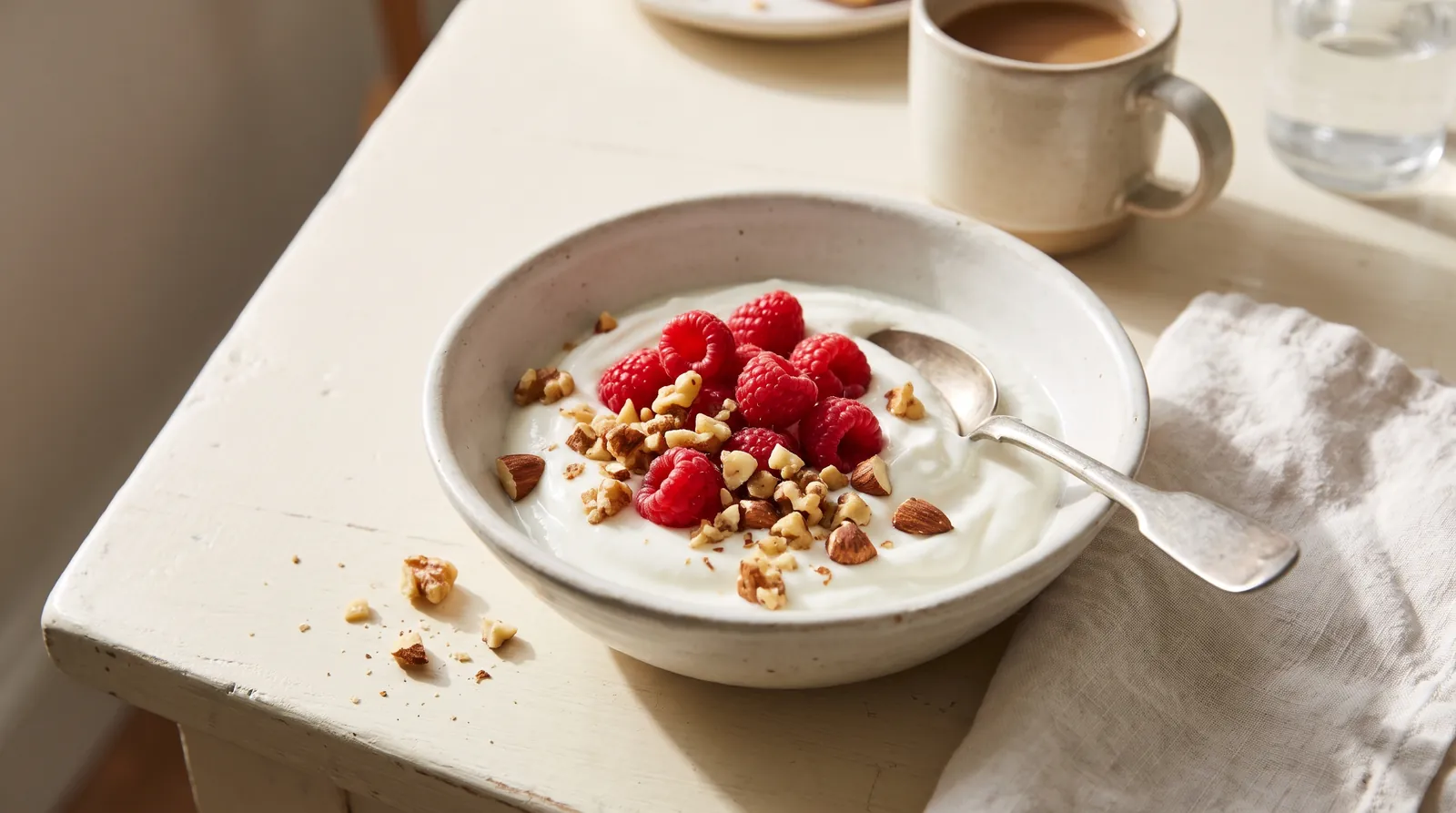
The meals: a high fiber low sugar meal plan
Every meal uses foods from the 14-day no sugar diet food list above. The 14 days are built from 19 simple meals that rotate. Every food in them is unsweetened, so the plan has no added sugar. Numbers are from USDA FoodData Central; "sugars" means total, all naturally occurring.
| Meal | What's in it | Calories | Protein | Fiber | Sugars |
|---|---|---|---|---|---|
| B1 Berry oatmeal | ½ cup oats in 1 cup milk, 1 cup raspberries, ½ oz almonds | 419 | 18 g | 14 g | 19 g |
| B2 Yogurt bowl | Plain Greek yogurt, 1 cup blueberries, ½ oz chia, ½ oz almonds | 334 | 24 g | 10 g | 21 g |
| B3 Eggs and sweet potato | 2 eggs with 1 cup spinach and 1 cup mushrooms in 1 tsp oil, 1 baked sweet potato | 320 | 18 g | 5 g | 10 g |
| B4 Cottage cheese bowl | ½ cup cottage cheese, 1 cup strawberries, ⅓ cup oats, ½ oz almonds | 324 | 19 g | 8 g | 13 g |
| L1 Chicken burrito bowl | 4 oz chicken, 1 cup quinoa, ½ cup black beans, ½ cup pepper, ¼ avocado | 601 | 52 g | 17 g | 5 g |
| L2 Lentil stew | 1 cup lentils, 2 cups spinach, ½ cup canned tomatoes, 1 carrot, 2 tsp olive oil, ½ cup brown rice | 491 | 24 g | 23 g | 10 g |
| L3 Tuna chickpea salad | 3 oz tuna, ½ cup chickpeas, 2 cups romaine, cucumber, tomato, 2 tsp olive oil, ½ cup quinoa | 445 | 30 g | 13 g | 10 g |
| L4 Salmon rice bowl | 3 oz salmon, ¾ cup brown rice, ½ cup edamame, cucumber, 1 carrot | 488 | 33 g | 8 g | 6 g |
| S1 Apple plate | 1 apple, ½ oz almonds, 1 oz cheddar | 290 | 10 g | 6 g | 20 g |
| S2 Yogurt and kiwi | Plain Greek yogurt, 1 kiwi | 142 | 18 g | 2 g | 12 g |
| S3 Edamame and orange | 1 cup edamame, 1 orange | 256 | 20 g | 11 g | 15 g |
| S4 Veggie snack box | 3 oz baby carrots, 2 tbsp hummus, 1 boiled egg, 1 pear | 280 | 10 g | 10 g | 22 g |
| D1 Salmon dinner | 4 oz salmon, 1 sweet potato, 1 cup green beans, 1 tsp oil | 419 | 30 g | 8 g | 12 g |
| D2 Chicken and broccoli | 4 oz chicken, ¾ cup brown rice, 1 cup broccoli, 2 tsp oil | 506 | 43 g | 8 g | 3 g |
| D3 Steak and quinoa | 4 oz sirloin, 1 cup quinoa, 1 cup zucchini, 2 tsp oil | 541 | 44 g | 7 g | 5 g |
| D4 Shrimp pasta | 4 oz shrimp, 1½ cups whole-wheat pasta, ½ cup canned tomatoes, 1 cup spinach, 2 tsp olive oil | 478 | 39 g | 10 g | 5 g |
| D5 Tofu stir-fry | ½ cup tofu, ¾ cup brown rice, broccoli, pepper, mushrooms, 2 tsp oil | 501 | 30 g | 10 g | 5 g |
| D6 Baked cod | 5 oz cod, 1 sweet potato, 1 cup cauliflower, 2 tsp olive oil | 368 | 39 g | 7 g | 10 g |
| D7 Turkey taco bowl | 4 oz ground turkey, ½ cup black beans, ½ cup brown rice, pepper, lettuce, ¼ avocado | 554 | 43 g | 14 g | 5 g |
Choose canned tomatoes and hummus with no added sugar; most plain versions have none. Season with herbs, spices, garlic, lemon and vinegar.
The 14-day no sugar menu
Here's the low sugar diet menu for two weeks, using the meal codes above:
| Day | Breakfast | Lunch | Snack | Dinner | Calories | Fiber |
|---|---|---|---|---|---|---|
| 1 | B1 | L1 | S1 | D1 | 1,729 | 44 g |
| 2 | B2 | L2 | S4 | D2 | 1,611 | 50 g |
| 3 | B3 | L3 | S3 | D3 | 1,561 | 36 g |
| 4 | B4 | L4 | S1 | D4 | 1,580 | 32 g |
| 5 | B1 | L2 | S2 | D5 | 1,554 | 48 g |
| 6 | B2 | L1 | S4 | D6 | 1,582 | 43 g |
| 7 | B3 | L3 | S3 | D7 | 1,574 | 43 g |
| 8 | B4 | L1 | S2 | D1 | 1,486 | 34 g |
| 9 | B1 | L4 | S1 | D2 | 1,703 | 36 g |
| 10 | B2 | L3 | S4 | D3 | 1,599 | 39 g |
| 11 | B3 | L2 | S3 | D4 | 1,546 | 49 g |
| 12 | B4 | L4 | S2 | D5 | 1,455 | 28 g |
| 13 | B1 | L1 | S4 | D6 | 1,667 | 47 g |
| 14 | B2 | L2 | S1 | D7 | 1,670 | 53 g |
This high fiber low sugar meal plan keeps protein at every meal, so it stays filling without sweets. Across the two weeks, the plan averages 1,594 calories, 107 g of protein and 42 g of fiber a day, with 0 g of added sugar. Total sugars run 36 to 58 g a day, all from whole fruit, vegetables, milk and yogurt.
Need more calories? Add a second snack or a slice of whole-wheat bread with no added sugar to any day; each snack in the table adds 140 to 290 calories. Need fewer? Use ½ cup instead of ¾ or 1 cup of rice or quinoa. To find your calorie target, use the TDEE calculator.

Shopping and prep for the 14 days
Because the meals repeat, shopping is simple. Take the 14-day no sugar diet food list above to the store and buy for one week at a time:
- Proteins: chicken breast, salmon, cod, shrimp, sirloin, ground turkey, canned tuna in water, tofu, eggs.
- Dairy: plain Greek yogurt, plain cottage cheese, plain milk, a block of cheddar.
- Grains and beans: oats, brown rice, quinoa, plain whole-wheat pasta, lentils, black beans, chickpeas, frozen edamame.
- Produce: spinach, romaine, broccoli, cauliflower, carrots, peppers, tomatoes, cucumbers, mushrooms, zucchini, green beans, sweet potatoes, avocados, berries (fresh or frozen), apples, oranges, kiwis, pears.
- Pantry: olive oil, almonds, chia seeds, canned tomatoes and hummus with no added sugar, herbs and spices.
On the first day, cook a pot of brown rice and a pot of quinoa, cook the lentils, and hard-boil a few eggs. That covers most lunches for the first half of the week. Frozen berries and vegetables keep the plan going when fresh produce runs out.
Eating out without added sugar
Restaurant food is harder to fit into a high fiber low sugar meal plan, because sauces, dressings and glazes often contain sugar you can't see. Choose grilled or roasted protein with vegetables, ask for dressing on the side and use oil and vinegar, and skip sweetened drinks and desserts. If a day out isn't perfect, pick up the low sugar diet menu again at the next meal.
How to spot added sugar
On U.S. food labels, added sugar has its own line: under Total Sugars, look for "Includes Xg Added Sugars," with a %DV based on 50 g. FDA's example shows how the two lines work together: a product with 15 g of total sugars and 7 g of added sugars has "7 grams of Added Sugars and 8 grams of naturally occurring sugars."
Then check the ingredient list for sugar under other names: syrups (corn, rice, maple, agave), honey, molasses, words ending in "-ose" like sucrose and dextrose, and fruit juice concentrates. FDA counts all of these as added sugars.
Two quick rules for the 14 days:
- If the Added Sugars line shows more than 0 g, swap it for an unsweetened version where you can.
- FDA's 5/20 rule applies: 5% DV or less per serving is low, 20% or more is high.
Our full guide on how to read nutrition facts labels walks through every line, and the nutrition label maker shows how the added sugar line is laid out.
Easy no-sugar swaps
| Instead of | Try |
|---|---|
| Soda or sweet tea | Sparkling water with lemon or lime, plain iced tea |
| Flavored yogurt | Plain Greek yogurt with fresh berries |
| Sweetened cereal or granola | Oats cooked in milk with fruit and nuts |
| Fruit canned in syrup | Fresh or frozen fruit |
| Juice | Whole fruit, which keeps the fiber |
| Sweetened peanut butter | Plain nuts or unsweetened nut butter |
| Bottled sauces and dressings | Olive oil, lemon, vinegar, herbs and spices |
| Dessert | A piece of fruit, or plain yogurt with cinnamon |
Fruit is your friend on a low sugar diet menu. The low-calorie fruits list shows which give the most volume for the fewest calories, and drinks are covered in water calories.
What to expect in 14 days
The first few days of a low sugar diet menu are usually the hardest, mainly because of habit: the afternoon cookie, the soda with lunch, the sweetened coffee. Planning replacements in advance, like the snacks in the plan, makes those moments easier.
Following a high fiber low sugar meal plan often cuts calories too, especially if you drank sugary drinks before. If you replace sweets with the whole foods in this plan rather than other snacks, you may lose some weight. Fiber goes up a lot: this plan averages 42 g a day, well above the 28 g Daily Value, so drink plenty of water.
A no sugar diet isn't a cure on its own, and it doesn't make calories irrelevant. A day of nuts, cheese and oil with no sugar can still be more than you need. The plan above keeps calories near 1,600 for that reason.
If you have diabetes, especially if you take insulin or medicines that can cause low blood sugar, talk to your doctor before changing how you eat, since your doses may need adjusting.
After 14 days
Two weeks on a low sugar diet menu is long enough to learn which foods carry hidden sugar and to find replacements you like. It also shows you which meals from the plan you enjoy enough to keep. Afterwards, many people keep most of the changes and bring back the occasional treat. That fits the guidelines' advice that no single meal go over 10 g of added sugars, and that sugary drinks be avoided altogether.
A good test is your weekly shop against the 14-day no sugar diet food list: if most of the cart is from the "eat" column of the food list, you're on track. For more ideas, see the healthy food list, or try a full week with counted meals in the 1700 calorie meal plan.
No sugar diet FAQ
What can I eat on a no sugar diet?
Vegetables, whole fruit, plain dairy, eggs, meat, fish, beans, lentils, nuts, seeds, whole grains like oats, brown rice and quinoa, and olive oil. A no sugar diet cuts added sugars, not the natural sugar in whole fruit, vegetables and plain milk.
Is fruit allowed on a no sugar diet?
Whole fruit is allowed on most no-added-sugar plans. Its sugar is naturally occurring and comes with fiber and water. FDA counts sugars from concentrated fruit juices as added sugars, so juice concentrates are the part to limit.
How much added sugar is OK?
The 2025–2030 Dietary Guidelines say no amount of added sugars is recommended as part of a healthy diet, and that one meal should contain no more than 10 grams. The FDA Daily Value for added sugars is 50 g a day.
How do I spot added sugar on a label?
Look for the line 'Includes Xg Added Sugars' under Total Sugars on the Nutrition Facts label. FDA counts sugars added in processing, table sugar, syrups, honey and concentrated fruit or vegetable juices as added sugars.
What will happen if I stop eating sugar for 14 days?
You'll likely eat more whole foods and fiber and drink fewer calories. If you cut sugary drinks and sweets without replacing them, you may also eat fewer calories, which can lead to some weight loss.
Sources
- U.S. Departments of Health and Human Services and Agriculture. Dietary Guidelines for Americans, 2025–2030, January 2026 (added sugars, sugar-sweetened beverages, non-nutritive sweeteners).
- U.S. Food and Drug Administration. How to understand and use the Nutrition Facts label (added sugars definition and example, 5/20 rule).
- U.S. Food and Drug Administration. Daily Value on the Nutrition and Supplement Facts labels.
- U.S. Department of Agriculture. FoodData Central (every food in the menu).