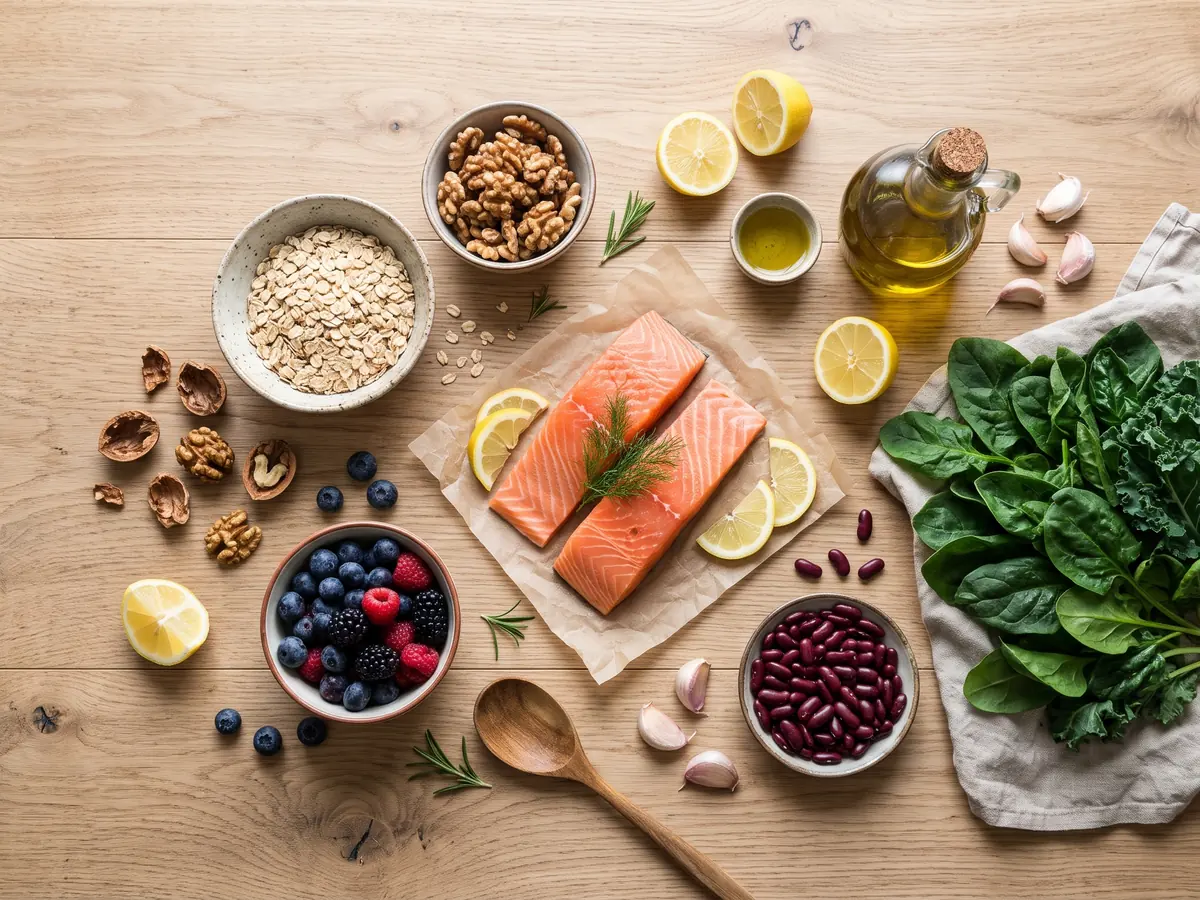
Short answerFood good for the heart includes vegetables, fruit, whole grains, beans and lentils, nuts, fish and seafood, low-fat dairy and liquid plant oils such as olive oil. Eat less sodium (under 2,300 mg a day), saturated fat (under 10% of calories), added sugars and ultra-processed food. The DASH and Mediterranean diets put this into practice and have the strongest trial evidence.
Medical note: If you have heart disease, high blood pressure, heart failure or kidney disease, follow the plan from your doctor or dietitian, which may set different sodium or fluid limits. See our medical disclaimer.
In this article
American Heart Association dietary guidelines
In 2021, the American Heart Association published updated dietary guidance to improve cardiovascular health. Rather than single "superfoods," it describes a whole eating pattern with ten features:
- Adjust energy intake and expenditure to achieve and maintain a healthy body weight.
- Eat plenty and a variety of fruits and vegetables.
- Choose whole grain foods and products.
- Choose healthy sources of protein: mostly plants, regular fish and seafood, low-fat or fat-free dairy, and if you eat meat or poultry, lean cuts and unprocessed forms.
- Use liquid plant oils rather than tropical oils and partially hydrogenated fats.
- Choose minimally processed foods instead of ultra-processed foods.
- Minimize the intake of beverages and foods with added sugars.
- Choose and prepare foods with little or no salt.
- If you don't drink alcohol, don't start; if you do, limit it.
- Follow this guidance wherever food is prepared or eaten.
When people search for the American Heart dietary guidelines, this 2021 statement is the current version. These American Heart Association dietary guidelines line up closely with the 2025–2030 Dietary Guidelines for Americans, which also ask people to prioritize whole, nutrient-dense foods, keep saturated fat under 10% of calories and sodium under 2,300 mg a day, and sharply limit highly processed foods and added sugars. The first point is worth noting too: body weight is part of heart health, so calories matter. The TDEE calculator shows how many you need.
Cardiovascular diet food list: foods to eat more of
Here is food good for the heart, grouped the way the AHA guidance describes it. Use it as a cardiovascular diet food list when you shop:
| Group | Examples | Why |
|---|---|---|
| Vegetables | Leafy greens, broccoli, carrots, tomatoes, peppers | Fiber, potassium, very low sodium when fresh |
| Fruit | Berries, apples, oranges, bananas, pears | Fiber and potassium for few calories |
| Whole grains | Oats, brown rice, quinoa, whole-wheat bread and pasta | Fiber; replace refined grains |
| Beans and lentils | Black beans, chickpeas, lentils, edamame | Plant protein and fiber, almost no sodium unless canned with salt |
| Fish and seafood | Salmon, cod, tuna, shrimp | Lean protein; salmon brings omega-3 fats |
| Nuts and seeds | Almonds, walnuts, chia seeds | Unsaturated fats and fiber |
| Dairy | Low-fat or fat-free milk and plain yogurt | Protein and calcium with less saturated fat |
| Plant oils | Olive, canola and other liquid oils | Unsaturated fats instead of saturated |
| Lean, unprocessed meat | Skinless chicken breast, lean beef cuts | Protein without processed-meat sodium |
For calories and protein in each food good for the heart, by portion, see the healthy food list, which covers 50 of them with USDA data.
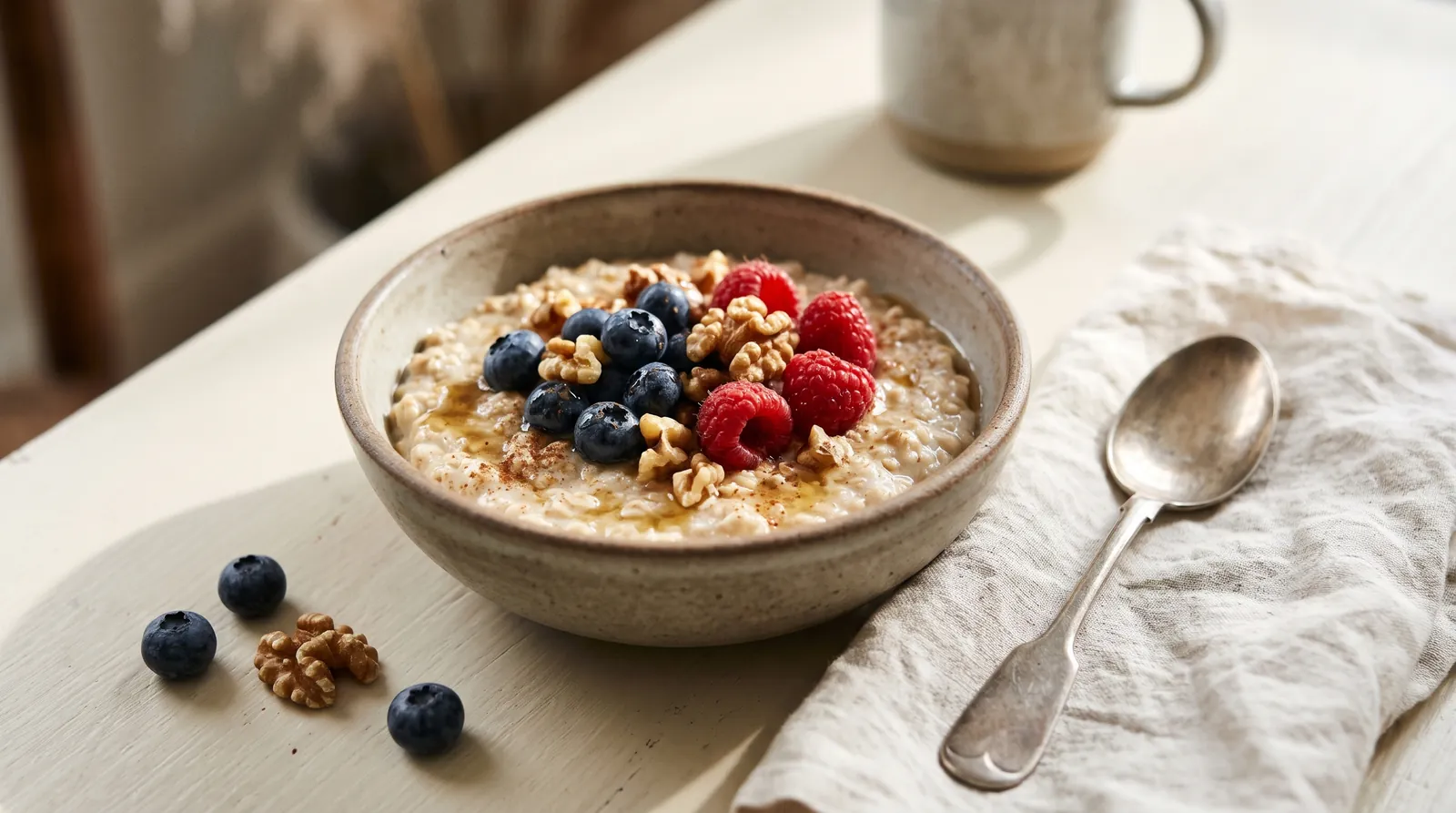
Foods to limit
- Ultra-processed foods, which the AHA says to swap for minimally processed ones. Packaged and prepared foods supply over 70% of the sodium Americans eat, according to the FDA.
- Processed meat such as deli meats, bacon and sausages, which are high in sodium. The AHA advises choosing unprocessed forms of meat.
- Tropical oils and partially hydrogenated fats. NHLBI's DASH plan names coconut, palm kernel and palm oils as foods high in saturated fat to limit, along with fatty meats and full-fat dairy.
- Sugar-sweetened drinks and sweets. Both the AHA and the DASH plan say to limit them.
- Alcohol. The AHA's advice: if you don't drink, don't start; if you do, limit it.
- Salty snacks and restaurant meals, covered in the sodium chart below.
Low sodium diet chart
Sodium is where most people can make the biggest change, and where a low sodium diet chart helps most. The FDA says Americans eat "about 3,400 mg of sodium per day" on average, while the Dietary Guidelines advise under 2,300 mg, "equal to about 1 teaspoon of table salt." NHLBI notes that 1,500 mg a day lowers blood pressure even further.
Most of that sodium isn't from the salt shaker. According to the FDA, "most dietary sodium (over 70%) comes from eating packaged and prepared foods." The FDA, citing the CDC, lists deli meat sandwiches, pizza, burritos and tacos, soups, savory snacks, poultry, pasta mixed dishes, burgers and egg dishes as foods that together supply about 40% of the sodium Americans eat.
This low sodium diet chart shows sodium in common foods, from USDA FoodData Central, with the percentage of the 2,300 mg Daily Value. FDA's rule of thumb: 5% DV or less per serving is low, 20% or more is high.
| Food | Sodium | % DV | Level |
|---|---|---|---|
| Oats, ½ cup dry | 2 mg | 0% | Low |
| Apple, banana, berries | 1–2 mg | 0% | Low |
| Black beans, ½ cup (no salt added) | 1 mg | 0% | Low |
| Almonds, unsalted, 1 oz | 0 mg | 0% | Low |
| Spinach, raw, 1 cup | 24 mg | 1% | Low |
| Carrot, 1 medium | 42 mg | 2% | Low |
| Salmon, 3 oz | 52 mg | 2% | Low |
| Chicken breast, 3 oz | 63 mg | 3% | Low |
| Plain Greek yogurt, 170 g | 61 mg | 3% | Low |
| Egg, 1 large | 62 mg | 3% | Low |
| Milk, 1 cup | 115 mg | 5% | Low |
| Hummus, 2 tbsp | 128 mg | 6% | Moderate |
| Whole-wheat bread, 1 slice | 146 mg | 6% | Moderate |
| Cheddar, 1 oz | 180 mg | 8% | Moderate |
| Tuna, canned, 3 oz | 210 mg | 9% | Moderate |
| Whole-wheat tortilla, 1 | 253 mg | 11% | Moderate |
| Salsa, 2 tbsp | 256 mg | 11% | Moderate |
| Cottage cheese, ½ cup | 348 mg | 15% | Moderate |
| BLT sandwich on white bread | 547 mg | 24% | High |
| Club sandwich on white bread | about 1,000 mg | 43% | High |
The low sodium diet chart makes the pattern clear: whole, unprocessed foods are almost all low in sodium, while breads, cheeses, sauces and especially sandwiches with deli meat add up fast. One club sandwich holds close to half a day's limit. For more sandwiches, see sandwich calories, which lists sodium too.
Saturated fat
The 2025–2030 Dietary Guidelines say saturated fat "should not exceed 10% of total daily calories." On 2,000 calories, that's about 22 g. The AHA guidance gets there by recommending liquid plant oils over tropical oils, mostly plant protein and fish, low-fat dairy, and lean, unprocessed meat.
Where it adds up fastest, per USDA data: 1 oz of cheddar has 5.4 g of saturated fat, 3 eggs about 4.9 g and 1 tbsp of olive oil 1.9 g. You don't need to avoid any of them, just keep an eye on the total. The fat intake calculator converts the 10% limit into grams for your calories.
DASH and Mediterranean: heart-healthy patterns that work
Two eating patterns built on food good for the heart have been tested in large randomized trials:
- DASH (Dietary Approaches to Stop Hypertension) emphasizes vegetables, fruit, whole grains, low-fat dairy, fish, poultry, beans, nuts and vegetable oils. In the DASH-Sodium trial, DASH with low sodium gave a systolic blood pressure 11.5 mm Hg lower in people with hypertension and 7.1 mm Hg lower in those without, compared with a typical diet high in sodium.
- Mediterranean eating centers on vegetables, beans, whole grains, fish, nuts and olive oil. In the PREDIMED trial of 7,447 people at high cardiovascular risk, a Mediterranean diet with extra-virgin olive oil or nuts lowered major cardiovascular events, with hazard ratios of 0.69 and 0.72, over a median of 4.8 years.
Both overlap almost completely with the AHA's ten features. Our types of diets guide compares them with keto, vegan and other diets.
Fiber and potassium: the nutrients to get more of
Choosing food good for the heart isn't only about cutting back. The FDA lists dietary fiber and potassium among the nutrients to get more of, and both come mainly from the plant foods at the top of the AHA list.
- Fiber: the Daily Value is 28 g, and adequate intakes in the Dietary Reference Intakes are 25 g for women and 38 g for men aged 19 to 30. The sample day below reaches 43 g, mostly from beans, quinoa, oats, berries and vegetables. The fiber calculator shows your target.
- Potassium: the Daily Value is 4,700 mg. Fruit and vegetables are the everyday sources: a navel orange has 232 mg and 3 oz of raw carrots 201 mg, according to USDA data on our food pages.
Neither needs supplements for most people. Filling half the plate with vegetables and fruit and choosing whole grains and beans covers both, while also pushing out some of the processed food that carries sodium.
Eating out with your heart in mind
With heart disease or without it, restaurant and takeout food is where sodium is hardest to control, since you can't see the recipe. A few habits help:
- Choose grilled, baked or roasted dishes over fried ones, and ask for sauces and dressings on the side.
- Pick vegetables, salad or fruit as sides instead of fries or chips.
- Skip the processed meat: a grilled chicken sandwich instead of a deli or club sandwich.
- On days you eat out, keep the other meals simple and low in sodium, like the sample day below.
A heart-healthy sample day
Here's a day of food good for the heart, built on the AHA guidance and counted with USDA data. It comes to 1,633 calories, with 43 g of fiber, 6% of calories from saturated fat and only 341 mg of sodium before any salt you add while cooking.
Heart-healthy day 1,633 calories · 89 g protein · 341 mg sodium
- Breakfast½ cup oats cooked in 1 cup milk, ½ cup blueberries, ½ oz almonds397
- LunchBean and quinoa salad: 1 cup black beans (no salt added), ½ cup quinoa, ⅓ cup avocado, 1 tomato, 1 cup lettuce, 1 tsp olive oil, lime juice489
- SnackPlain Greek yogurt and 1 apple195
- Dinner4 oz baked salmon, ¾ cup brown rice, 1 cup broccoli, 2 tsp olive oil, herbs and lemon553
Totals from USDA FoodData Central for the amounts listed. Canned beans vary widely in sodium; choose "no salt added" or rinse them.
That leaves room for nearly 2,000 mg of sodium from seasoning and the occasional packaged food while staying under the 2,300 mg limit. Add calories to suit your needs with more whole grains, fruit or nuts; for full weeks of meals, see the 1800 calorie meal plan, which averages about 1,020 mg of sodium before salt.
Diet with heart disease
If you already have heart disease, diet is part of treatment, and the details depend on your condition and medicines. Some general points that most guidance shares:
- Your care team's plan comes first. People with heart failure or kidney disease may get specific sodium or fluid limits.
- Sodium matters more. Lower sodium lowers blood pressure, as the DASH-Sodium trial showed, and NHLBI notes that 1,500 mg a day lowers it further than 2,300 mg.
- The pattern is the same. A diet with heart disease still looks like DASH or Mediterranean eating: vegetables, fruit, whole grains, beans, fish, nuts, plant oils and lean protein.
- Weight and activity count. The AHA's first point is balancing calories in and out for a healthy weight.
A registered dietitian can turn this cardiovascular diet food list into a personal plan for a diet with heart disease. Ask your doctor for a referral.
Practical tips for heart-healthy eating
Knowing which food is good for the heart is the easy part; the habits below make it stick. Pick one or two to start, then add more once they feel normal.
- Read the sodium line. On packaged foods, compare brands and pick the one at 5% DV or less. Our guide to reading nutrition labels shows how.
- Cook more at home. With over 70% of sodium coming from packaged and prepared foods, home cooking gives you control.
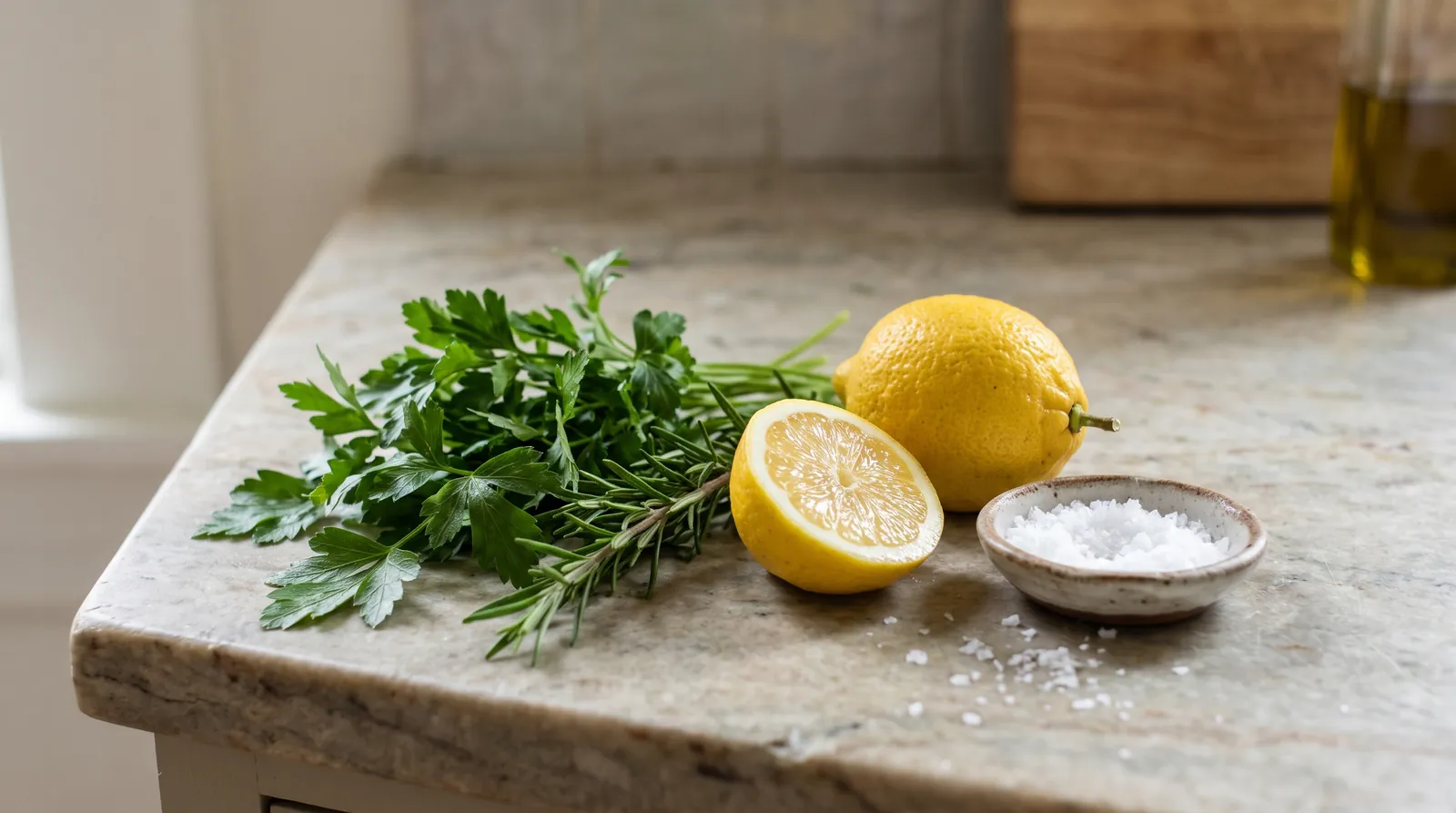
- Flavor without salt. Herbs, spices, garlic, lemon, lime and vinegar add flavor with no sodium.
- Swap the fat, not just cut it. Cook with olive or canola oil instead of butter or coconut oil.
- Eat fish regularly. The AHA lists regular fish and seafood among healthy protein sources.
- Rethink the sandwich. Deli meat sandwiches are a top sodium source. Use leftover roast chicken, tuna or beans instead of processed meat.
- Drink water. Swap sugary drinks for water; see water calories for how common drinks compare.
Heart-healthy diet FAQ
What food is good for the heart?
Vegetables, fruit, whole grains, beans and lentils, nuts, fish and seafood, low-fat dairy and liquid plant oils like olive oil. The American Heart Association also advises choosing minimally processed foods and preparing food with little or no salt.
What are the American Heart Association dietary guidelines?
The AHA's 2021 guidance lists 10 features of a heart-healthy pattern, including eating plenty of fruit and vegetables, choosing whole grains and healthy protein sources, using liquid plant oils, choosing minimally processed foods, minimizing added sugars, and choosing foods with little or no salt.
How much sodium should I eat a day?
The Dietary Guidelines advise less than 2,300 mg a day for people 14 and older, about a teaspoon of salt. The NHLBI notes that 1,500 mg lowers blood pressure even further. Americans eat about 3,400 mg a day on average.
What should you eat with heart disease?
Follow your cardiologist's or dietitian's plan first. In general, a heart-healthy pattern like DASH or the Mediterranean diet, low in sodium and saturated fat and rich in vegetables, fruit, whole grains, beans, fish and nuts, is the base most heart guidance shares.
Where does most sodium come from?
According to the FDA, over 70% of the sodium Americans eat comes from packaged and prepared foods, not from the salt shaker. Deli meat sandwiches, pizza, burritos and tacos, and soups are among the top sources.
Sources
- Lichtenstein AH, Appel LJ, et al. 2021 Dietary guidance to improve cardiovascular health: a scientific statement from the American Heart Association. Circulation, 2021.
- U.S. Food and Drug Administration. Sodium in your diet.
- National Heart, Lung, and Blood Institute. DASH eating plan.
- Sacks FM, et al. Effects on blood pressure of reduced dietary sodium and the DASH diet. N Engl J Med, 2001.
- Estruch R, et al. Primary prevention of cardiovascular disease with a Mediterranean diet supplemented with extra-virgin olive oil or nuts. N Engl J Med, 2018.
- U.S. Departments of Health and Human Services and Agriculture. Dietary Guidelines for Americans, 2025–2030, January 2026.
- U.S. Department of Agriculture. FoodData Central (sodium and nutrient values).