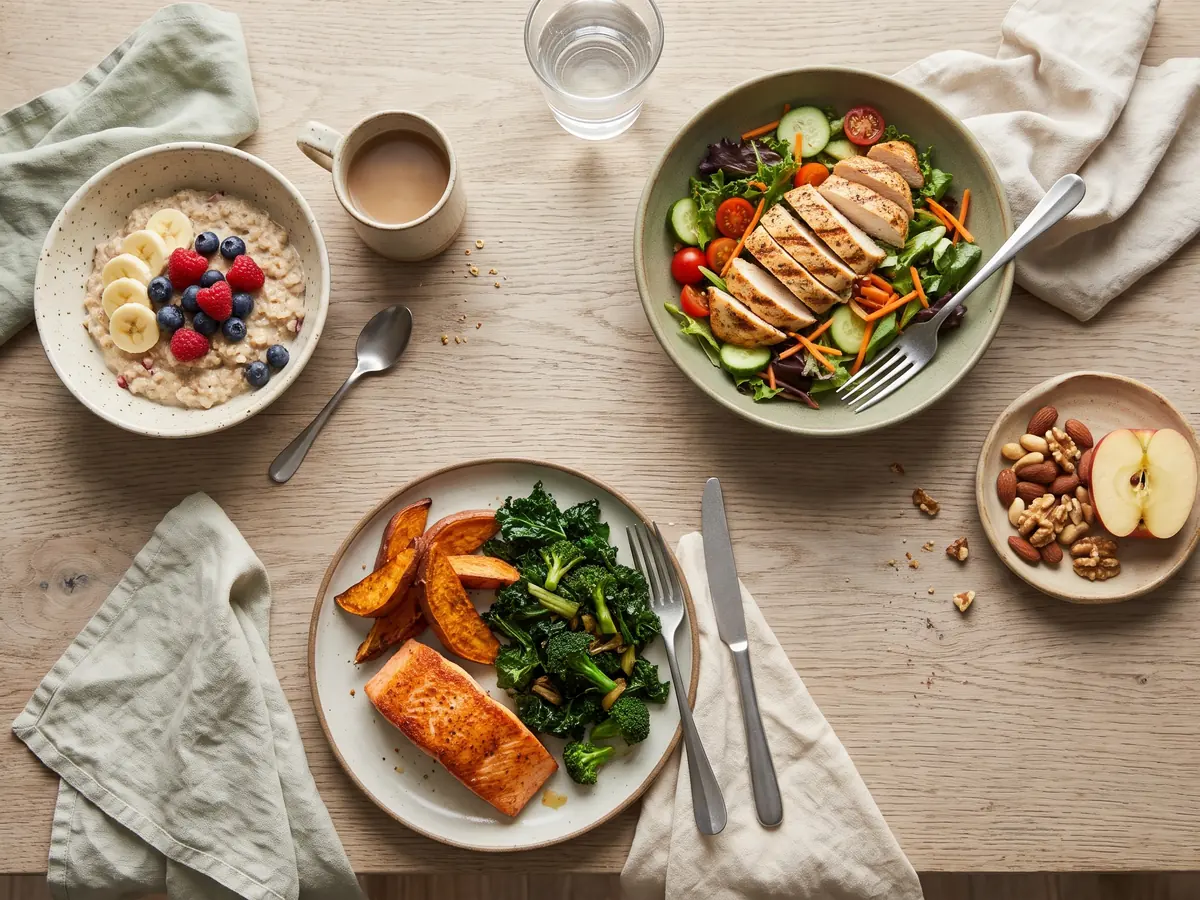
Short answerAn 1800 calorie diet works for weight loss when your maintenance calories are around 2,300 to 2,500, which is common for men and for moderately active women: that's a 500 to 700 calorie deficit, about 1 to 1.5 pounds a week. This plan's seven days range from 1,777 to 1,818 calories, with 108 to 128 g of protein and no added sugar.
In this article
Who is an 1800 calorie diet right for?
Whether 1,800 calories means losing weight, holding steady or even gaining depends on how much you burn. Using the Mifflin-St Jeor equation from our TDEE calculator, here are a few examples:
| Person | Maintenance | Daily gap at 1,800 | Result |
|---|---|---|---|
| Woman, 30, 170 cm, 80 kg, moderately active | about 2,405 | −605 | About 1.2 lb a week of loss at first |
| Man, 35, 178 cm, 85 kg, lightly active | about 2,465 | −665 | About 1.3 lb a week |
| Woman, 35, 165 cm, 70 kg, moderately active | about 2,163 | −363 | About 0.7 lb a week |
| Man, 50, 175 cm, 75 kg, sedentary | about 1,918 | −118 | Slow loss |
| Woman, 40, 160 cm, 60 kg, lightly active | about 1,704 | +96 | Roughly maintenance |
So an 1800 calorie meal plan for weight loss fits best for men and for active or larger women. For smaller, less active people it's closer to a maintenance diet, which is useful too: after a weight loss phase, the 1800 calories meal plan is a common landing point. Check your own number with the TDEE calculator, and see your timeline in the weight loss simulator.
Food groups in a diet for 1800 calories
The Dietary Guidelines for Americans, 2025–2030, publish daily servings for each calorie level. At 1,800 calories:
| Food group | Servings a day | One serving is |
|---|---|---|
| Protein foods | 2½–3½ | 3 oz cooked meat or fish, 1 egg, ½ cup beans or lentils, 1 oz nuts |
| Dairy | 3 | 1 cup milk, ¾ cup yogurt, 1 oz cheese |
| Vegetables | 3 | 1 cup raw or cooked, 2 cups leafy greens |
| Fruits | 1½ | 1 cup raw, ½ cup dried |
| Whole grains | 2–4 | ½ cup cooked oats, rice or quinoa; 1 slice bread; 1 tortilla |
| Healthy fats | 4 teaspoons | 1 tsp olive oil or butter |
This plan follows that structure and adds more protein, which the same guidelines encourage at 1.2 to 1.6 g per kg of body weight. Some days run over on whole grains or fruit to keep calories at 1,800 with whole foods rather than processed snacks.
The 7-day 1800 calorie meal plan
Each day of this 1800 calories a day meal plan has breakfast, lunch, dinner and one snack. Calories are for the amounts shown; meat and fish are cooked weights, and oats are dry.
Day 1 1,818 calories · 118 g protein · 37 g fiber
- Breakfast2 eggs, 2 slices whole-wheat toast with ¼ avocado, 1 orange444
- LunchTurkey rice bowl: 3 oz ground turkey, ½ cup black beans, 1 cup brown rice, 2 cups romaine, 2 tbsp salsa561
- SnackGreek yogurt (170 g), ½ cup blueberries, ½ oz almonds224
- Dinner4 oz salmon, 1 cup quinoa, 1 cup broccoli, 2 tsp olive oil589
Day 2 1,793 calories · 128 g protein · 29 g fiber
- Breakfast½ cup oats cooked in 1 cup milk, 1 banana, 1 tbsp peanut butter, 1 boiled egg552
- LunchChicken pita: 4 oz chicken, 1 whole-wheat pita, 2 tbsp hummus, 1 cup cucumber, 1 tomato463
- Snack½ cup cottage cheese, 1 peach, ½ oz almonds231
- Dinner5 oz baked cod, 1 sweet potato, ½ cup brown rice, 1 cup green beans, 1 tbsp olive oil547
Day 3 1,777 calories · 125 g protein · 40 g fiber
- BreakfastYogurt bowl: Greek yogurt, ½ cup oats, 1 cup strawberries, 1 tbsp chia, 1 banana454
- LunchTuna sandwich: 3 oz tuna, 2 slices whole-wheat bread, 1 oz mozzarella, lettuce, ½ tomato, 1 tsp olive oil; 1 carrot389
- Snack1 cup edamame, 1 apple, ½ oz almonds363
- Dinner4 oz sirloin, 1 cup brown rice, 1 cup mushrooms and 2 cups spinach sautéed in 2 tsp olive oil570
Day 4 1,801 calories · 112 g protein · 48 g fiber
- BreakfastBreakfast wrap: 2 eggs with spinach and mushrooms in a whole-wheat tortilla, 2 tbsp salsa; 2 kiwis391
- LunchLentil quinoa salad: 1 cup lentils, ½ cup quinoa, pepper, cucumber, 1 tbsp olive oil; 1 small whole-wheat pita561
- Snack1 cup milk, 1 apple, ½ oz almonds298
- DinnerChicken pasta: 4 oz chicken, 1½ cups whole-wheat pasta, ½ cup canned tomatoes, ½ cup zucchini, 1 oz mozzarella551
Day 5 1,803 calories · 115 g protein · 44 g fiber
- Breakfast½ cup cottage cheese, 2 slices whole-wheat toast with 1 tbsp peanut butter, 1 pear450
- LunchSalmon rice bowl: 3 oz salmon, 1 cup brown rice, ½ cup edamame, cucumber, 1 carrot551
- SnackGreek yogurt, 1 cup raspberries, ½ oz almonds245
- DinnerTofu stir-fry: ½ cup firm tofu, 1 cup broccoli, ½ cup pepper, 2 tsp oil; 1 cup quinoa557
Day 6 1,797 calories · 111 g protein · 42 g fiber
- Breakfast½ cup oats in 1 cup milk with ½ cup raspberries, 1 boiled egg, ½ oz almonds464
- LunchChicken burrito: 3 oz chicken, 1 whole-wheat tortilla, ¼ avocado, lettuce, ½ tomato, ¼ cup black beans, ½ cup quinoa514
- Snack1 orange, 1 oz mozzarella, 1 apple, ½ oz almonds315
- Dinner4 oz shrimp, 1 cup brown rice, 1 cup green beans, ½ cup pepper, 2 tsp oil503
Day 7 1,778 calories · 108 g protein · 45 g fiber
- Breakfast2 eggs, 2 slices whole-wheat toast, ½ tomato, 1 cup blueberries412
- LunchChickpea salad: 1 cup chickpeas, ½ cup quinoa, 2 cups spinach, cucumber, 2 tsp olive oil; 1 whole-wheat pita649
- SnackGreek yogurt, 1 apple, ½ oz almonds276
- Dinner4 oz ground turkey, 1 sweet potato, 1 cup broccoli, ½ cup cauliflower, 1 tsp oil441
Season with herbs, spices, garlic, lemon, vinegar and mustard as you like; they add almost no calories. If you swap a whole meal, keep it within about 100 calories of the one it replaces.
What does 1800 calories look like?
Spread over a day, a meal plan for 1800 calories a day is a satisfying amount of whole food. In this plan the average day splits like this:
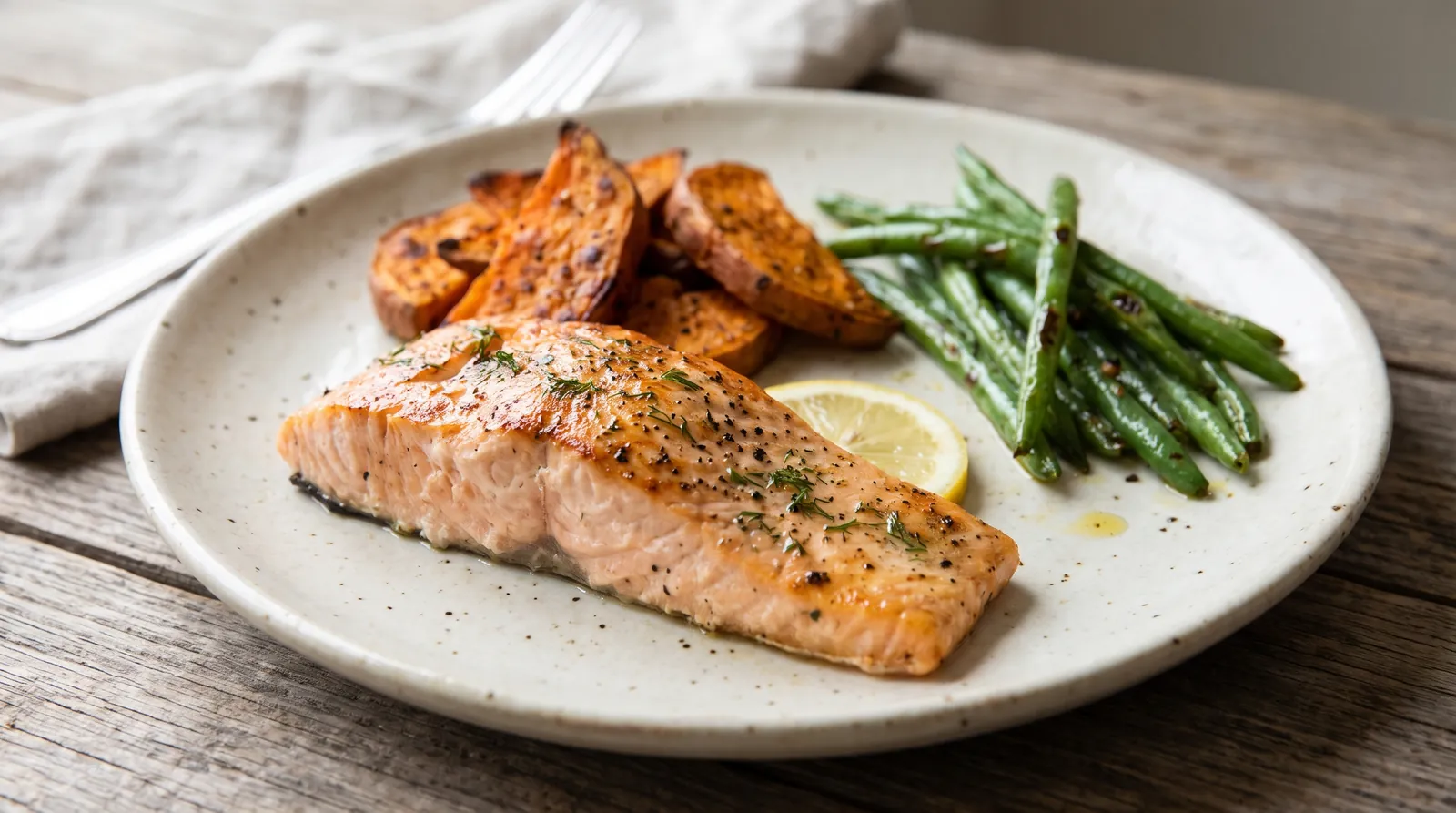
A plate like day 1's dinner, a 4 oz salmon fillet, a cup of quinoa and a cup of broccoli, comes to 589 calories with 37 g of protein. A whole-food 1800 cal diet meal plan also delivers a lot of fiber: 41 g on average here, more than the 25 to 38 g most adults are advised to eat. If that's a big jump from what you usually eat, raise fiber over a week or two and drink plenty of water, since a sudden increase can cause bloating. Most of the fiber here comes from beans, lentils, whole grains, berries and vegetables, which also bring potassium, magnesium and folate.
| Nutrient | Average a day | Guideline |
|---|---|---|
| Calories | 1,795 | Your target |
| Protein | 117 g (26%) | 1.2–1.6 g per kg |
| Carbohydrate | 214 g (48%) | 45–65% of calories |
| Fat | 59 g (29%) | 20–35% of calories |
| Saturated fat | 6% of calories | No more than 10% |
| Fiber | 41 g | 25 g women, 38 g men |
| Sodium (before added salt) | about 1,020 mg | Under 2,300 mg |
| Added sugars | 0 g | None recommended |
1800 calorie meal plan, high protein version
The plan already averages 117 g of protein. For a high protein 1800 calorie meal plan closer to 140 to 150 g, for example if you lift weights or weigh over 90 kg:
- Swap the afternoon snack for a container of Greek yogurt plus ½ cup cottage cheese (29 g protein, about 192 calories).
- Use 5 oz instead of 3 oz of chicken, fish or turkey at lunch (about 11 to 18 g more protein, 50 to 120 more calories depending on the protein).
- Trade the half-ounce of almonds for a hard-boiled egg (similar calories, double the protein).
- Balance the extra calories by trimming ½ cup of rice, quinoa or pasta that day (about 90 to 125 calories).
Our macro calculator shows how much protein suits your weight and goal, and the chicken breast and steak protein pages give protein by the ounce.
Vegetarian swaps
Days 4, 5 and 7 are already mostly vegetarian. For the other days, replace each 3 to 4 oz portion of meat or fish with one of these, which are close in protein:
- ½ cup firm tofu: 181 calories, 22 g protein
- 1 cup cooked lentils: 230 calories, 18 g protein
- 1 cup edamame: 188 calories, 18 g protein
- 2 eggs plus ½ cup cottage cheese: 247 calories, 24 g protein
Beans and lentils bring extra carbohydrate and fiber, so you may want slightly less rice or quinoa at that meal.
Diet plan, 1800 calories: build your own day
You don't have to follow the menus exactly. Any 1800 calorie diet meal plan that keeps this structure will land close to the same numbers:
| Meal | Build it from | Target |
|---|---|---|
| Breakfast | 1 protein (2 eggs, Greek yogurt or cottage cheese) + 1 whole grain + 1 fruit | about 400–500 calories, 20–30 g protein |
| Lunch | 3–4 oz protein or 1 cup beans + 1 cup grain or a wrap + 2 cups vegetables + 2 tsp oil or 2 tbsp hummus | about 450–600 calories, 30–40 g protein |
| Snack | Dairy or edamame + 1 fruit + ½ oz nuts | about 200–350 calories, 10–20 g protein |
| Dinner | 4–5 oz protein + 1 cup grain or a sweet potato + 1–2 cups vegetables + 1–2 tsp oil | about 450–600 calories, 35–45 g protein |
To build an 1800 kcal meal plan of your own, fill the plate with vegetables first, add the protein, then the grain, and measure the oil. If a meal comes out heavier, make the snack lighter. To check a homemade recipe, enter it in the recipe nutrition calculator.
How fast will you lose weight on 1,800 calories?
It depends on the gap between 1,800 and your maintenance. Using the examples above and the usual estimate of about 3,500 calories per pound at the start:
The first week often shows more because of water, and the pace slows over months as your maintenance falls with your weight. The weight loss simulator models that slowdown for your own numbers. The CDC notes that people who lose about 1 to 2 pounds a week are more likely to keep the weight off.
1800 calories for men and for women
For many men, 1,800 calories is a meaningful deficit, often 500 calories or more below maintenance, and it leaves plenty of room for protein, which is why an 1800 calorie high protein meal plan suits them. Men who are tall or very active may find it too low to sustain and could do better at 2,000 to 2,200 while still losing weight.
For women, 1,800 calories is often a gentle deficit or close to maintenance. It's a good level for active women, larger women, and anyone moving from a weight loss phase to maintenance. Smaller, less active women who want to lose weight may need a lower target, such as our 1,500-calorie plan. During pregnancy or breastfeeding, calorie needs change; the breastfeeding calorie calculator covers nursing mothers.
Eating out on an 1800 calorie diet
At 1,800 calories, one restaurant meal can fit if you plan around it. A regular turkey sandwich on white bread has about 217 calories in USDA survey data and a BLT about 243, while a chicken salad sandwich is about 443 and a tuna salad sandwich about 392; see sandwich calories for more. Choose grilled protein, vegetables and one starch, ask for sauces on the side, and make the other meals that day a little lighter.
Common mistakes on an 1800 calorie diet
- Assuming 1,800 is a deficit for everyone. For smaller, less active people it's maintenance; check your number first.
- Skipping breakfast, then overeating at night. Spreading 1,800 calories across the day keeps hunger steady.
- Eyeballing oil and nuts. A tablespoon of olive oil is about 119 calories and an ounce of almonds 164.
- Low protein. Aim for at least 25 to 30 g at each main meal.
- Drinking calories. Juice, soda and alcohol can take 200 to 400 calories out of your budget without filling you up.
Grocery list for the week
For one person, all seven days:
- Protein: about 11 oz cooked chicken breast, 7 oz cooked salmon, 5 oz cod, 4 oz shrimp, 4 oz sirloin, 7 oz cooked ground turkey, 1 can tuna, ½ cup firm tofu, 8 eggs.
- Beans and nuts: 1 cup chickpeas, ¾ cup black beans, 1 cup cooked lentils, 1½ cups edamame, 4 oz almonds, 2 tbsp peanut butter, 2 tbsp hummus, 1 tbsp chia seeds.
- Dairy: 4 containers Greek yogurt, 3 cups milk, 1 cup cottage cheese, 3 oz mozzarella.
- Grains: 1½ cups dry oats, about 4½ cups cooked brown rice, 3½ cups cooked quinoa, 1½ cups cooked whole-wheat pasta, 8 slices whole-wheat bread, 2 whole-wheat pitas plus 1 small, 2 whole-wheat tortillas.
- Vegetables: broccoli (3 cups), green beans (2 cups), spinach (5 cups), romaine (4 cups), 2 red peppers, 1 large cucumber, 3 tomatoes, 2 carrots, mushrooms, zucchini, cauliflower, 2 sweet potatoes, canned tomatoes, salsa.
- Fruit: 4 apples, 2 bananas, 2 oranges, 2 kiwis, 1 pear, 1 peach, blueberries, strawberries, raspberries, 1 avocado.
- Pantry: olive oil, herbs and spices.
Meal prep for the week
Most of this plan comes together from a few batch-cooked basics. On Sunday and Wednesday, spend about an hour on:
- Grains: cook 2 to 3 cups of brown rice and 2 cups of quinoa; cool and refrigerate in portions.
- Proteins: bake chicken breasts and portion ground turkey; boil 4 eggs.
- Vegetables: wash greens, chop peppers, cucumber and carrots, and roast a tray of broccoli and cauliflower.
- Snacks: portion almonds into ½ oz bags and set out fruit where you'll see it.
- Fish: cook salmon, cod and shrimp on the day you eat them.
With those ready, most meals take 5 to 10 minutes to assemble.
Equal-calorie swaps
Bored of a food? Swap within these groups; each pair is within about 30 calories:
| Instead of | Try |
|---|---|
| 1 cup brown rice (248) | 1 cup quinoa (222) |
| 4 oz chicken breast (186) | 4 oz shrimp plus 1 egg (190) |
| 1 apple (95) | 1 pear (101) or 1 banana (105) |
| 1 cup raspberries (64) | 1 cup strawberries (49) or ½ cup blueberries (42) |
| Greek yogurt, 170 g (100) | ½ cup cottage cheese (92) |
| 2 slices whole-wheat bread (161) | 1 whole-wheat pita (168) |
| 1 sweet potato (103) | ½ cup brown rice (124) |
| ½ oz almonds (81) | 1 boiled egg (78) |
1,800 calories and exercise
If you train hard, an 1800 kcal diet may feel tight on workout days. Rather than eating back every calorie your watch reports, add a snack of about 200 to 300 calories on your hardest days, such as Greek yogurt with a banana or a slice of whole-wheat toast with peanut butter. Keep protein high to protect muscle; the body recomposition calculator sets separate training-day and rest-day targets if you want more structure. For general health, the CDC advises adults to get at least 150 minutes of moderate activity a week plus strength training on two or more days.
Tips for following an 1800 calorie diet
- Batch-cook grains and proteins twice a week; the plan repeats brown rice and quinoa on purpose.
- Weigh oil, nuts and grains for the first week. They're where calories drift most.
- Keep the snack. It's what keeps dinner portions sensible.
- Drink water with meals; sugary drinks are the easiest calories to cut. See drink calories.
- Log what you eat in the calorie counter for the first two weeks to check portions.
- Re-check your target every few weeks as your weight changes.
Printing the 1800 calorie meal plan as a PDF
To keep this 1800 calorie meal plan menu on your fridge, use your browser's Print option and choose "Save as PDF" or print directly. The day cards, totals and grocery list all print, so the saved 1800 calorie meal plan pdf works on a phone too.
Other calorie levels
Need fewer calories? The 1700 calorie meal plan follows the same format 100 calories lower, and our 7-day meal plan at 1,500 calories uses a similar structure. For the food groups at every calorie level, see what a balanced diet is, and for the bigger picture of losing weight, our weight loss plan. Need more? The 2000 calorie meal plan follows the same format.
Using 1,800 calories for maintenance
For many women and smaller men, an 1800 calorie plan is where they end up after losing weight. If that's you, the same menus work as a maintenance diet: the protein keeps you full, the fiber keeps digestion regular, and the lack of added sugar and processed snacks makes it easier not to drift upward. Weigh yourself once or twice a week and watch the monthly average. If it creeps up by more than a kilo or two, trim a snack; if it keeps falling and you don't want it to, add one. Around holidays and vacations, aim to hold steady rather than lose, and go back to the plan as soon as normal weeks return.
Maintenance is also a good time to try new recipes within the same structure, so the plan doesn't get stale. Keep the template (protein, vegetables, a whole grain, a little healthy fat) and change the flavors.
Check with a doctor first if
Most healthy adults can follow this 1800 cal meal plan safely. Talk to your doctor or a registered dietitian before changing your diet if you're pregnant or breastfeeding, have diabetes, kidney disease or heart disease, take medicines that affect appetite or blood sugar, are under 18, or have a history of disordered eating. People with food allergies should swap foods like fish, shellfish, nuts, eggs, dairy, soy and wheat for safe alternatives with similar calories and protein.
1800 calorie diet FAQ
Is 1800 calories a day good for weight loss?
For many men and for moderately active women, yes. If your maintenance is around 2,300 to 2,500 calories, 1,800 is a 500 to 700 calorie deficit, about 1 to 1.5 pounds a week. If your maintenance is close to 1,800, it will hold your weight steady instead.
What does 1800 calories look like?
Three meals of about 400 to 600 calories plus one or two snacks. For example: eggs and toast with fruit for breakfast, a chicken pita with hummus for lunch, Greek yogurt and berries as a snack, and salmon with quinoa and broccoli for dinner.
How much protein is in this 1800 calorie meal plan?
108 to 128 grams a day, 117 g on average, about 26% of calories. That meets the 1.2 to 1.6 g per kg goal of the 2025–2030 Dietary Guidelines for adults weighing roughly 75 to 95 kg.
How many servings of each food group are in 1,800 calories?
The 2025–2030 Dietary Guidelines' 1,800-calorie pattern has 2½ to 3½ servings of protein foods, 3 of dairy, 3 of vegetables, 1½ of fruit, 2 to 4 of whole grains and 4 teaspoons of healthy fats a day.
Can I print this meal plan as a PDF?
Yes. Use your browser's Print option and choose Save as PDF; the day cards and grocery list print cleanly.
Sources
- U.S. Departments of Health and Human Services and Agriculture. Daily Servings by Calorie Level and Dietary Guidelines for Americans, 2025–2030, January 2026.
- U.S. Department of Agriculture. FoodData Central (SR Legacy values for every food in the plan).
- Mifflin MD, St Jeor ST, et al. A new predictive equation for resting energy expenditure in healthy individuals. Am J Clin Nutr, 1990.
- National Academies. Dietary Reference Intakes for Energy, Carbohydrate, Fiber, Fat, Fatty Acids, Cholesterol, Protein, and Amino Acids, 2005.
- Centers for Disease Control and Prevention. Steps for losing weight; Physical activity guidelines for adults.