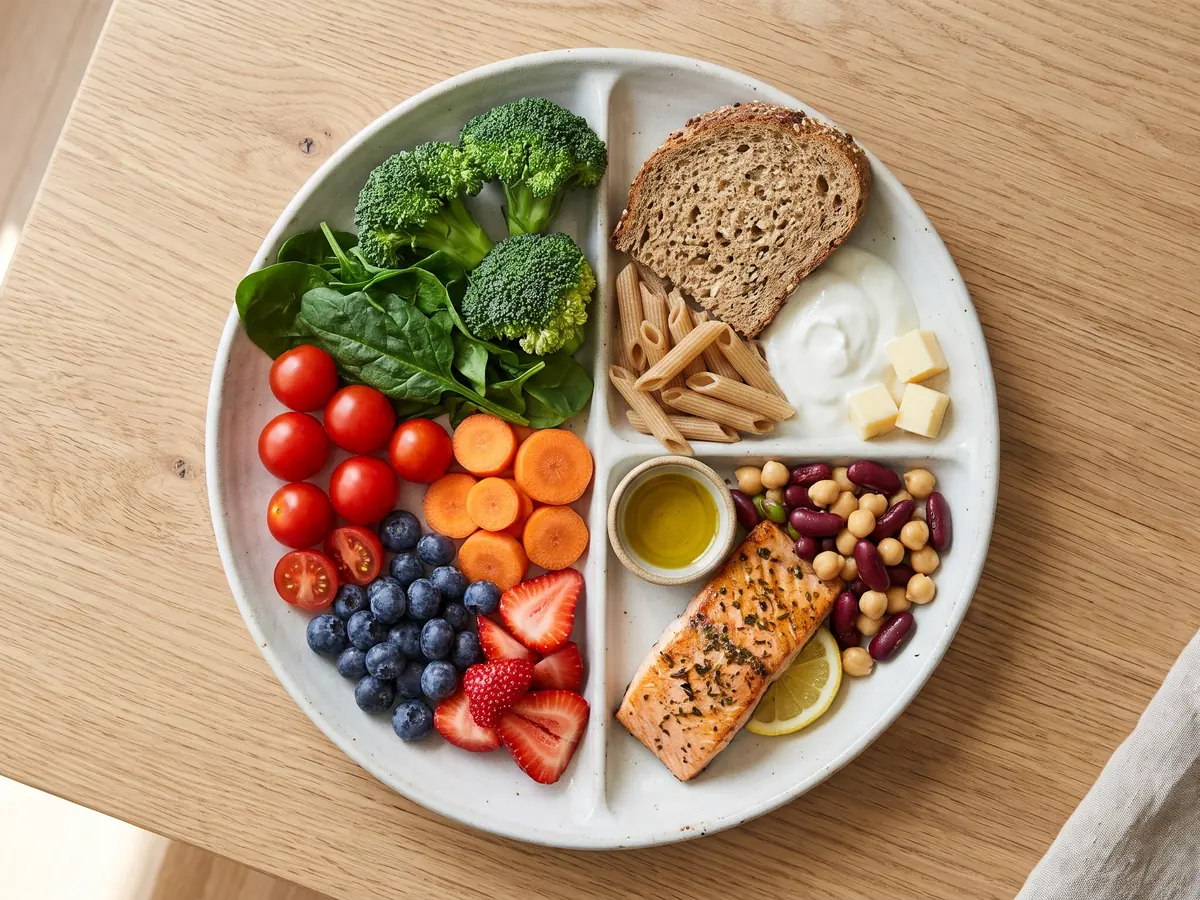
Short answerThe Eatwell Guide splits food into five groups. Fruit and vegetables should make up just over a third of what you eat, and potatoes, bread, rice, pasta and other starchy carbohydrates just over a third, wholegrain where possible. The rest comes from some beans, pulses, fish, eggs and meat, some dairy or alternatives, and small amounts of unsaturated oils and spreads. Foods high in fat, salt and sugar sit outside the guide.
In this article
- From eat well plate to Eatwell Guide
- The five food groups
- Fruit and vegetables
- Starchy carbohydrates
- Beans, pulses, fish, eggs and meat
- Dairy and alternatives
- Oils and spreads
- Foods outside the guide
- Where all types of food fit
- Who the guide is for
- A sample Eatwell day
- Blank Eatwell Guide to print
- Other food group models
- FAQ
From the eat well plate to the Eatwell Guide
For years, the UK's healthy eating picture was the eatwell plate. In March 2016 it was replaced by the Eatwell Guide, which, in the government's words, "has replaced the eatwell plate and continues to define the government's advice on a healthy balanced diet." The guide is now owned by the Office for Health Improvement and Disparities, and the NHS uses it as the basis of its healthy eating advice.
The idea behind the eat well plate is simple. The guide is drawn as a plate divided into five segments, one for each food group, sized to show "how much of what you eat should come from each food group." The government notes that the proportions apply to what you eat over a day or even a week, not to every single meal. A plate of pasta with salad doesn't need to look like the guide on its own, as long as the week balances out.
Many people still search for the eat well plate, and both names describe the same idea: a balanced and varied diet built mostly from fruit, vegetables and starchy foods, with smaller amounts of protein foods and dairy, and very little added fat and sugar.
The five food groups in the Eatwell Guide
- Fruit and vegetables: just over a third
- Potatoes, bread, rice, pasta and other starchy carbohydrates: just over a third
- Beans, pulses, fish, eggs, meat and other proteins: some
- Dairy and alternatives: some
- Oils and spreads: small amounts
These five are the food types the guide asks you to build your meals from. Fluids sit alongside the eat well plate: the guide recommends 6 to 8 glasses of fluid a day. A small panel outside the plate covers foods high in fat, salt and sugar, which aren't part of the five groups. For cutting sugar in particular, see our no sugar diet.
The government booklet explains mixed dishes with an example of a meal of mashed potato, meat and vegetables: the mashed potato fits the starchy segment, the meat, meat substitute or beans fit the protein segment, and the onion, carrots and peas fit the fruit and vegetable segment.
Fruit and vegetables: just over a third
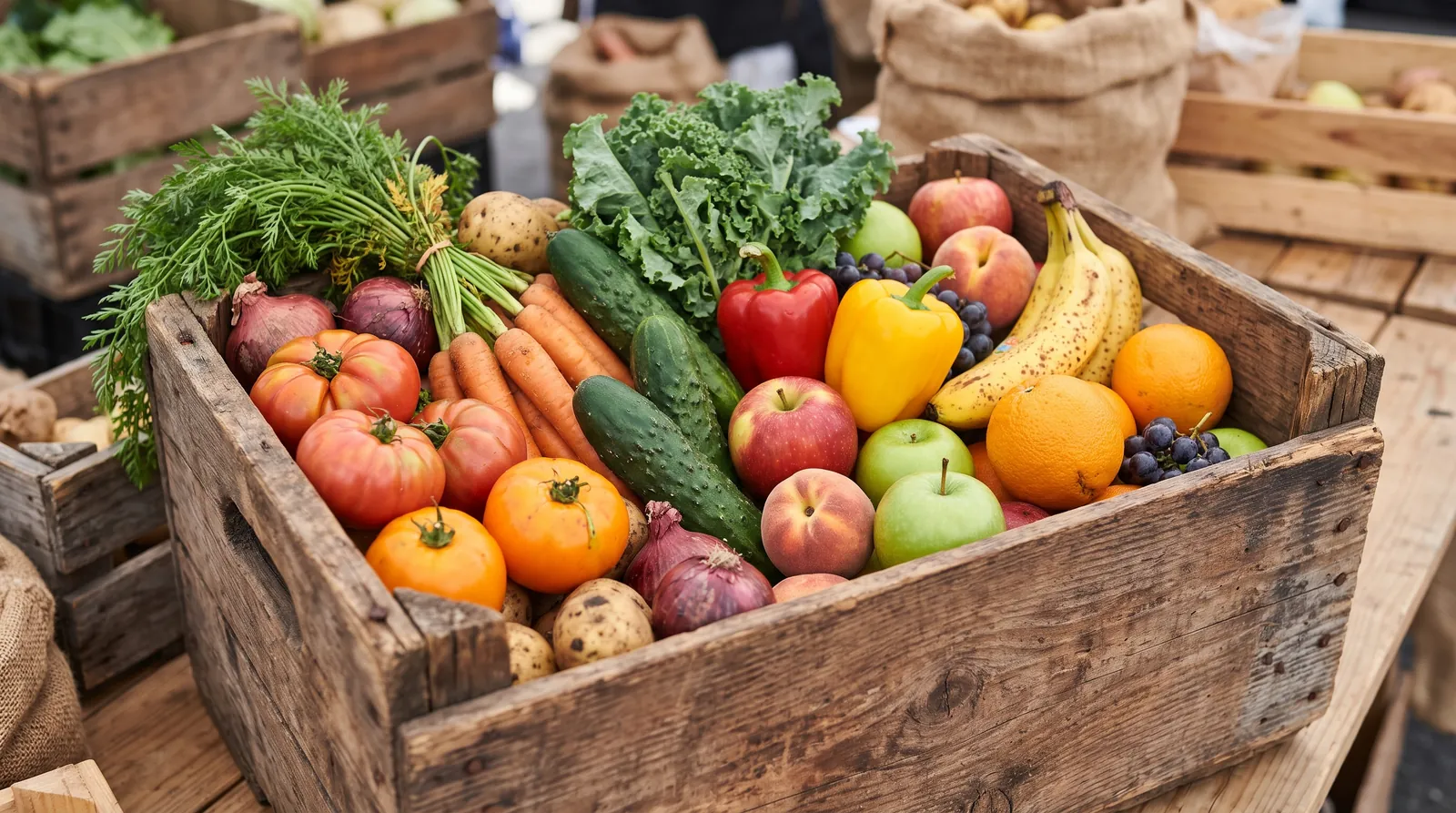
The eat well plate guidance says fruit and vegetables "should make up just over a third of the food we eat each day," and to eat at least 5 portions of a variety every day. Fresh, frozen, canned, dried and juiced all count, with limits on juice.
What counts as a portion
An adult portion is 80 g. According to the NHS and the government guide, that's:
- 1 piece of medium fruit, such as an apple, banana, pear or orange
- 2 pieces of small fruit, such as satsumas
- a slice of a large fruit, such as melon
- 3 heaped tablespoons of cooked vegetables, such as carrots, peas or sweetcorn
- a dessert bowl of salad, or 1 medium tomato or 7 cherry tomatoes
- 30 g of dried fruit, about 1 heaped tablespoon of raisins
Two limits apply. Fruit juice, vegetable juice and smoothies count as one portion at most, and the combined total shouldn't be more than 150 ml a day. Beans and pulses count as one portion at most, however many you eat. Potatoes don't count toward your 5 A Day; they belong in the starchy group. For how 5 A Day compares with U.S. cup servings, see how many servings of vegetables per day.
For calorie numbers by fruit, see our lowest calorie fruits, oranges and carrots pages.
Potatoes, bread, rice, pasta and other starchy carbohydrates
The second large segment of the eat well plate, also just over a third of what you eat. The guide's advice is to base meals on these foods and to choose wholegrain or higher-fibre versions where you can: wholewheat pasta, brown rice, wholemeal bread, oats, or simply leaving the skins on potatoes. Wholegrain food contains more fibre than white or refined starchy food and often more of other nutrients too.
The eat well plate booklet also tackles a common worry: some people think starchy food is fattening, but gram for gram it contains less than half the calories of fat. The calories usually come from the butter, oil, cheese and sauces added to it. This is where the UK guide differs most from the new US advice, which puts more weight on protein and asks people to cut refined carbohydrates sharply; both agree on choosing whole grains.
Beans, pulses, fish, eggs, meat and other proteins
"Eat some" is the guide's wording for this food type. Specific advice for this group:
- Pulses: beans, peas and lentils are good alternatives to meat, being naturally very low in fat and high in fibre, protein, vitamins and minerals.
- Fish: aim for at least two portions (2 × 140 g) a week, including one of oily fish such as salmon, sardines, mackerel or kippers.
- Red and processed meat: on average, eat no more than 70 g a day. Processed meat includes sausages, bacon, cured meats and reformed meat products.
- Choosing meat: pick lean cuts and leaner mince, cut the fat off meat and the skin off chicken, and grill or steam rather than fry.
For protein by the ounce, see chicken breast, chicken thighs and steak.
Dairy and alternatives
"Have some dairy and alternatives," choosing lower fat and lower sugar options. Dairy is a good source of protein and vitamins and an important source of calcium. The guide suggests milks lower in fat (skimmed, 1% or semi-skimmed), yoghurts lower in fat and sugar, and cheeses lower in fat and salt. For dairy alternatives like soya drinks, it recommends unsweetened, calcium-fortified versions.
This is another area where the UK and the new US guidance differ: the 2025–2030 Dietary Guidelines for Americans recommend including full-fat dairy with no added sugars. Both agree on avoiding added sugar in dairy.
Oils and spreads: small amounts
The smallest segment of the eat well plate, and the thinnest slice of any nutrition wheel. Choose unsaturated oils and spreads, such as vegetable, rapeseed and olive oil and spreads made from them, and eat them in small amounts. The guide notes that all types of fat are high in energy and that, in general, people eat too much saturated fat. A tablespoon of olive oil has about 119 calories, so measuring it makes a real difference.
Foods outside the guide: high in fat, salt and sugar
Chocolate, cakes, biscuits, full-sugar soft drinks, butter, cream and ice cream sit outside the eat well plate. The guide is direct about them: these foods "are not needed in the diet," so if included, they should be eaten less often and in small amounts. Checking labels and swapping sugary drinks for diet, sugar-free or no-added-sugar versions are two simple steps it suggests. Our pages on chocolate calories and drinks give the numbers.
Drinks: 6 to 8 glasses a day
For healthy eating UK guidance on drinks, water, lower fat milk and sugar-free drinks, including tea and coffee, all count toward the 6 to 8 glasses. Fruit juice and smoothies count too, but they're a source of free sugars, so keep them to 150 ml a day combined.
All types of food: where they fit
Most food kinds slot neatly into one segment; mixed dishes span several. The booklet's own lists put meat, poultry, game, white fish, oily fish, shellfish, nuts, eggs, beans and pulses (including baked beans) and vegetarian alternatives like tofu and mycoprotein in the protein group. A quick guide to all types of food:
| Food | Segment | Note |
|---|---|---|
| Apples, bananas, berries, oranges | Fruit and vegetables | 1 medium fruit is a portion |
| Carrots, broccoli, peas, salad | Fruit and vegetables | 3 heaped tbsp cooked is a portion |
| Fruit juice and smoothies | Fruit and vegetables | Max 150 ml a day, counts as 1 portion |
| Potatoes, yams, plantains | Starchy carbohydrates | Potatoes don't count toward 5 A Day |
| Bread, rice, pasta, oats, couscous | Starchy carbohydrates | Choose wholegrain where you can |
| Beans, lentils, chickpeas | Proteins | Also count as 1 of your 5 A Day, once a day |
| Fish, eggs, chicken, meat, tofu | Proteins | 2 fish portions a week, 1 oily |
| Nuts and seeds | Proteins | High in energy; a small handful |
| Milk, yoghurt, cheese, fortified soya | Dairy and alternatives | Lower fat and lower sugar options |
| Olive, rapeseed, vegetable oil and spreads | Oils and spreads | Small amounts |
| Butter, cream, chocolate, cakes, biscuits, crisps | Outside the guide | Less often and in small amounts |
| Water, tea, coffee, lower fat milk | Drinks | 6 to 8 glasses a day |
Mixed dishes like stews, curries, pizza and sandwiches combine more than one food type and count toward each segment they contain. A sandwich, for example, is starchy bread plus a protein filling, plus vegetables if you add salad. Our sandwich calories page shows how fillings change the totals.
Who the Eatwell Guide is for
For healthy eating UK-wide, the booklet says the guide applies to most people regardless of weight, dietary restrictions or preferences, or ethnic origin. It doesn't apply to children under 2, who have different nutritional needs; between 2 and 5, children should gradually move to eating the same foods as the rest of the family, in the guide's proportions. A low-fat diet isn't suitable for children under five, and the guide notes that children aged 1 to 4 should also have a daily 10 microgram vitamin D supplement. Anyone with special dietary requirements or medical needs may want to check with a registered dietitian on how to adapt it.
Vegetarian and vegan eating on the Eatwell Guide
The eat well plate works without meat or fish. In the protein segment, beans, lentils, chickpeas, nuts, eggs, tofu and mycoprotein take their place, and the booklet describes pulses as good alternatives to meat because they're naturally very low in fat and high in fibre, protein, vitamins and minerals. For vegans, the dairy segment becomes unsweetened, calcium-fortified alternatives such as soya drinks and yoghurts. Since the guide recommends a portion of oily fish each week, vegetarians and vegans may want to ask a dietitian about alternatives, along with nutrients like vitamin B12 that plant foods don't naturally provide.
Using food labels with the guide
Across all types of food, many packaged foods carry a front-of-pack label showing nutrition per serving and the percentage of your reference intake. Where colour-coded labels are used, you can tell at a glance whether a product is high, medium or low in fat, saturated fat, sugars and salt; the booklet's advice is to pick products with more greens and ambers and fewer reds. It also warns that label portion sizes are suggestions and may not match what you actually eat; some foods eaten as one serving are labelled per half pack. To understand the US-style Nutrition Facts panel, our nutrition label maker explains each line.
What about alcohol?
Alcohol isn't part of the Eatwell Guide's food groups, but the booklet covers it: the UK's low-risk guideline is no more than 14 units a week for both men and women. It also points out that alcohol is high in calories, with a medium glass of wine at about 135 kcal and a 25 ml shot of 40% spirit at about 56 kcal. If you're watching your weight, drinks are one of the easiest places to cut back.
A sample day on the Eatwell Guide
Here's one day built on the eat well plate proportions, with calories counted from USDA FoodData Central. It comes to about 1,840 calories, close to the UK reference of 2,000 for women.
Breakfast 492 calories
- StarchyPorridge: ½ cup oats made with 1 cup 2% (semi-skimmed) milk; 1 slice wholemeal toast355
- Fruit1 banana and a handful of raspberries (about 1½ portions)137
Lunch 501 calories
- Starchy2 slices wholemeal bread161
- Protein3 oz tuna and ½ cup chickpeas207
- Veg and fruitSalad of lettuce, 1 tomato and cucumber; 1 apple (about 3 portions)133
Snack 206 calories
- DairyPlain nonfat Greek yoghurt (170 g)100
- Veg and nuts1 carrot, ½ oz almonds106
Dinner 643 calories
- Oily fish4 oz salmon233
- Starchy1 cup brown rice248
- Vegetables1 cup broccoli and a portion of green beans (about 3 portions)83
- Oil2 tsp olive oil80
That's a variety of foods with well over 5 portions of fruit and vegetables, a portion of oily fish, three starchy meals with wholegrain choices, dairy and a little unsaturated oil. Measured against the UK's adult reference intakes: about 45 g of fibre against the 30 g recommendation, about 2.6 g of salt against a maximum of 6 g, about 10 g of saturated fat against 24 g for women, and no free sugars. If you count calories, the TDEE calculator gives your own target, and the fiber calculator tracks fibre.

Eatwell meal ideas
Building meals with a variety of foods around the guide gets easier with a few go-to combinations. Each idea below covers at least three segments:
- Breakfast: porridge with milk and a sliced banana; wholemeal toast with eggs and grilled tomatoes; plain yoghurt with berries and oats.
- Lunch: a wholemeal sandwich with tuna or egg and plenty of salad; lentil and vegetable soup with a wholemeal roll; a baked potato with beans and a side salad.
- Dinner: salmon with brown rice and two vegetables; chicken and vegetable stir-fry with noodles; a bean chilli with rice and a side of sweetcorn.
- Snacks: a piece of fruit, carrot sticks with hummus, a small handful of unsalted nuts, or a glass of lower fat milk.
Half the plate as vegetables at lunch and dinner is the easiest way to reach "just over a third" over the day. If you cook in batches, our recipe nutrition calculator works out the calories per portion.
Using the Eatwell Guide to lose weight
The eat well plate is about the balance of your diet, not the amount. To lose weight, keep the same proportions and eat smaller portions so you take in fewer calories than you burn. Fruit, vegetables and wholegrain starchy foods are filling for their calories, so keeping those segments full while trimming oils, spreads and foods outside the guide is a simple way to cut back. Use the TDEE calculator for a calorie target, and our weight loss plan for the steps.
Following the guide on a budget
The eat well plate doesn't need expensive foods. Frozen and canned vegetables and fruit count toward your 5 A Day, and the guide lists canned fish and baked beans in the protein group. Oats, potatoes with their skins, brown rice and wholemeal bread cover the starchy segment cheaply, and lentils, chickpeas and eggs are low-cost protein. Buying own-brand versions, cooking larger batches and freezing portions helps the money go further. Check labels on canned foods and choose those without added salt or sugar, such as vegetables in water and fruit in juice.
Blank Eatwell Guide to print
A blank Eatwell Guide is a handy way to check your own day or to teach the food groups. Print this page (the menu and footer are hidden when printing), then write what you ate in each segment and see how close your day is to the guide.
1. Fruit and vegetables:
2. Potatoes, bread, rice, pasta, starchy carbohydrates:
3. Beans, pulses, fish, eggs, meat, other proteins:
4. Dairy and alternatives:
5. Oils and spreads:
Outside the plate (high fat, salt, sugar):
Drinks (aim for 6 to 8 glasses):
Why variety in food matters
The guide asks for variety in food: a variety of fruit and vegetables, not just five of the same thing, and the same idea applies across all the groups. A variety of foods gives you a wider range of vitamins, minerals and fibre types than any single "superfood" can. Practical ways to add variety in food:
- Pick a different vegetable for each dinner of the week.
- Swap meat for beans, lentils or chickpeas two or three times a week.
- Rotate grains: oats, brown rice, wholewheat pasta, wholemeal bread and potatoes with skins.
- Have oily fish once a week and white fish once.
- Buy frozen and canned vegetables and fruit to keep options open between shops.
Other food group models
The four main food groups
Older healthy eating models, and many school lessons, used four main food groups, usually fruit and vegetables, grains and starchy foods, protein foods, and dairy. The Eatwell Guide keeps those four and adds oils and spreads as a fifth, small group, while placing high fat, salt and sugar foods outside the plate.
The US Dietary Guidelines
In the US, where the four main food groups have given way to six, the Dietary Guidelines for Americans, 2025–2030, describe six groups: protein foods, dairy, vegetables, fruits, whole grains and healthy fats, with daily servings for each calorie level. Compared with the Eatwell Guide, they put more emphasis on protein (1.2 to 1.6 g per kg of body weight a day), allow full-fat dairy, and ask for a sharp cut in refined carbohydrates and highly processed foods. The guidelines describe their picture as reclaiming the food pyramid. See what a balanced diet is for the US servings.
Nutrition wheels and food level charts
A nutrition wheel, a food pyramid and a food level chart are other ways of drawing the same idea: eat more of the foods at the base or the biggest segments, and less of those at the top or in the smallest. Whatever the shape, the message is consistent across official guides: lots of vegetables, fruit and whole grains, enough protein, some dairy, a little healthy fat, and few foods high in fat, salt and sugar.
Healthy eating in the UK: the numbers
Alongside the Eatwell Guide, the UK government publishes reference intakes for adults aged 19 to 64:
| Per day | Women | Men |
|---|---|---|
| Energy | 2,000 kcal | 2,500 kcal |
| Fat (less than) | 78 g | 97 g |
| Saturated fat (less than) | 24 g | 31 g |
| Carbohydrate (at least) | 267 g | 333 g |
| Free sugars (less than) | 27 g | 33 g |
| Salt (less than) | 6 g | 6 g |
| Fibre | 30 g | 30 g |
These are population averages; your own needs depend on your size and activity. The free sugar figures equal 5% of energy, the level recommended by the UK's Scientific Advisory Committee on Nutrition.
Eatwell Guide FAQ
What is the eat well plate?
The eatwell plate was the UK's picture of a healthy balanced diet. In 2016 it was replaced by the Eatwell Guide, which shows how much of what you eat, over a day or a week, should come from each of five food groups.
What are the 5 food groups in the Eatwell Guide?
Fruit and vegetables; potatoes, bread, rice, pasta and other starchy carbohydrates; beans, pulses, fish, eggs, meat and other proteins; dairy and alternatives; and oils and spreads.
How much of the Eatwell Guide should be fruit and vegetables?
Just over a third of the food you eat, which means at least 5 portions of a variety of fruit and vegetables a day. An adult portion is 80 g.
Where do cakes, crisps and chocolate fit?
Outside the main guide. Foods high in fat, salt and sugar, such as chocolate, cakes, biscuits, full-sugar soft drinks, butter, cream and ice cream, aren't needed in the diet and should be eaten less often and in small amounts.
Is the Eatwell Guide the same as MyPlate?
They're similar ideas from different countries. The Eatwell Guide is the UK's model; the US has its own Dietary Guidelines for Americans, whose 2025–2030 edition uses six groups: protein foods, dairy, vegetables, fruits, whole grains and healthy fats.
Sources
- Office for Health Improvement and Disparities, GOV.UK. The Eatwell Guide (published 2016, updated 2024); The Eatwell Guide booklet; A quick guide to the government's healthy eating recommendations; Government dietary recommendations.
- NHS. The Eatwell Guide; 5 A Day portion sizes.
- U.S. Departments of Health and Human Services and Agriculture. Dietary Guidelines for Americans, 2025–2030, January 2026.
- U.S. Department of Agriculture. FoodData Central (calories for the sample day).