
Short answerYes, burning 300 calories a day through exercise is good. For a 70 kg (154 lb) adult it's about an hour of brisk walking or 30 minutes of running, and it's more than the CDC's minimum of 150 minutes of moderate activity a week. Burning 400 to 600 calories a day is a solid target if you're training for weight loss. 1,000 calories a day is possible, but it means 1.5 to 4 hours of exercise and is hard to keep up.
In this article
How can we burn calories?
Before deciding how many calories to burn, it helps to know where they go. Your body burns calories in three ways:
- Resting metabolism. The energy to keep you alive: breathing, circulation, keeping warm. For most people this is the biggest share. Our metabolism guide shows an example where it's about 73% of the day.
- Digesting food. A smaller share, roughly a tenth.
- Activity. Everything from walking to the car to a hard workout. This is the part you control most directly.
So how can we burn calories on purpose? Mainly by adding activity. Exercise researchers measure activity in METs, short for metabolic equivalents. One MET is the energy you use sitting quietly, about 1 calorie per kilogram of body weight per hour. An activity rated 8 METs burns about 8 times that. The 2024 Adult Compendium of Physical Activities lists MET values for hundreds of activities, and it's what our calories burned calculator uses.
The formula is simple:
Calories burned = METs × weight in kg × hours
For example, running at 6 mph is 9.3 METs. A 70 kg (154 lb) person running for 30 minutes burns about 9.3 × 70 × 0.5 = 326 calories.
One caveat: that number includes the calories you'd have burned anyway sitting on the couch, 1 MET's worth. The extra burn from the workout is METs minus 1. For a 30-minute run at 70 kg, that's about 291 calories rather than 326. The calculator shows both.
Minutes to burn 100 to 1,000 calories
Here's how long common activities take to burn each target, for a 70 kg (154 lb) adult, using 2024 Compendium MET values. Heavier people burn calories faster, lighter people more slowly.
| Activity (METs) | 100 | 300 | 500 | 700 | 1,000 |
|---|---|---|---|---|---|
| Yoga, hatha (2.3) | 37 | 112 | 186 | 261 | 373 |
| Weight training (3.5) | 24 | 73 | 122 | 171 | 245 |
| Walking, 3 mph (3.8) | 23 | 68 | 113 | 158 | 226 |
| Cycling, 12–13.9 mph (8.0) | 11 | 32 | 54 | 75 | 107 |
| Swimming laps, moderate (8.0) | 11 | 32 | 54 | 75 | 107 |
| Running, 6 mph (9.3) | 9 | 28 | 46 | 65 | 92 |
| HIIT, vigorous (11.0) | 8 | 23 | 39 | 55 | 78 |
| Jump rope, moderate (11.8) | 7 | 22 | 36 | 51 | 73 |
And how body weight changes things, for the same targets with brisk walking at 3 mph:
| Weight | 100 | 300 | 500 | 1,000 |
|---|---|---|---|---|
| 60 kg (132 lb) | 26 | 79 | 132 | 263 |
| 70 kg (154 lb) | 23 | 68 | 113 | 226 |
| 90 kg (198 lb) | 18 | 53 | 88 | 175 |
For your own weight and speed, use the walking calorie calculator, or count it in steps with the steps to calories calculator.
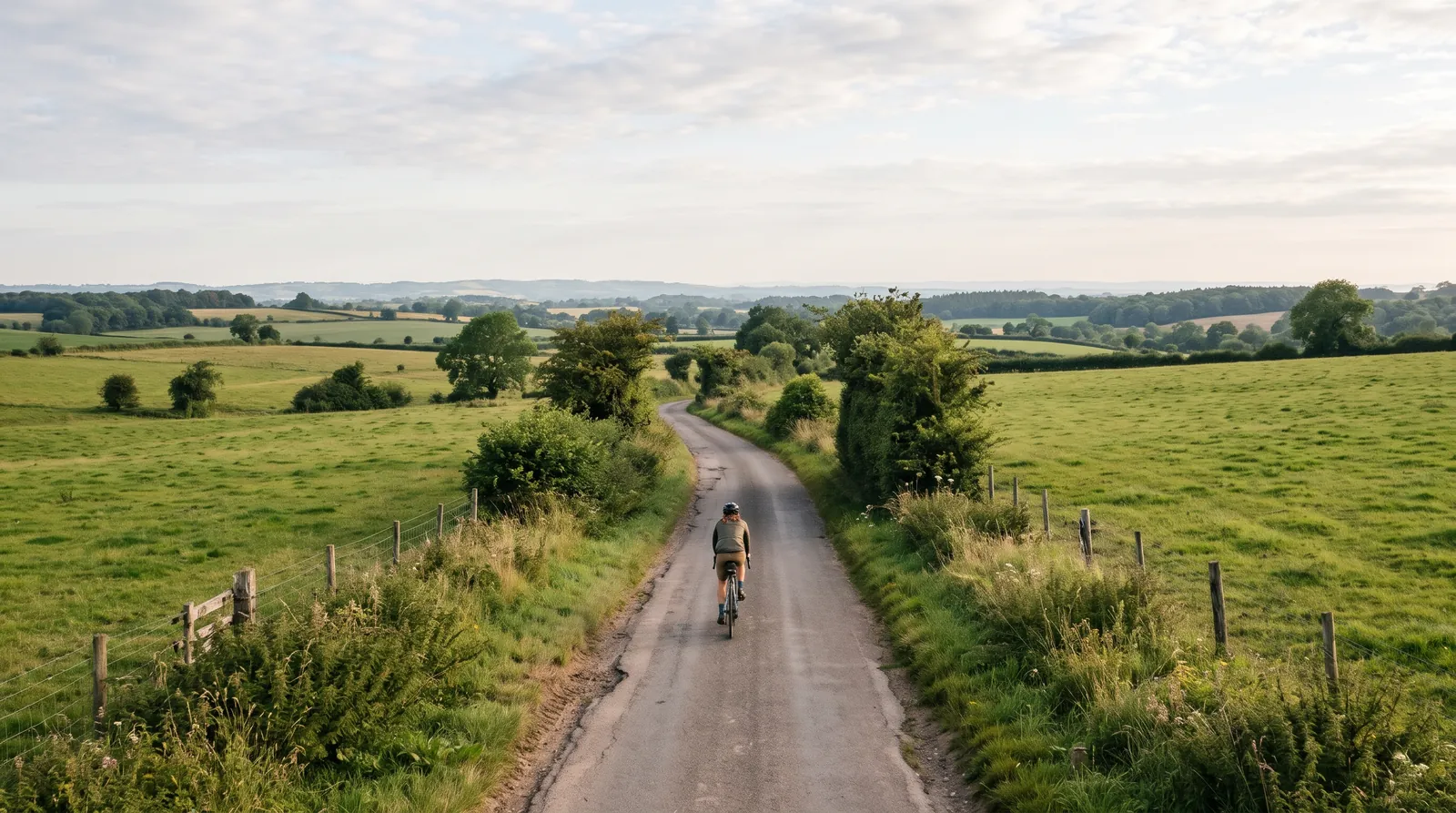
Is each level good? 100 to 1,000 calories a day
Is burning 100 calories a day good?
It's a start. 100 calories is about 23 minutes of brisk walking at 70 kg, or a short bike ride. Over a week that's 700 calories. Done every day, it covers most of the CDC's 150-minute weekly minimum for moderate activity. For weight loss it's small on its own, but it adds up and it's easy to keep.
Is burning 200 calories a day good?
Yes. Burning 200 calories a day is about 45 minutes of walking or 18 minutes of running at 70 kg, and 1,400 calories a week. A daily 45-minute walk also puts you well over the 150-minute minimum. Burning 200 kcal a day is a realistic habit for nearly anyone who can walk comfortably.
Is burning 250 calories a day good?
Yes. 250 calories is about 56 minutes of walking, 27 minutes of cycling at 12 to 14 mph, or 23 minutes of running at 6 mph for a 70 kg adult. That's 1,750 a week.
Is burning 300 calories a day good?
Yes, and it's a good everyday target. Burning 300 calories a day takes about 68 minutes of walking, 32 minutes of cycling or swimming laps, or 28 minutes of running at 70 kg. Over a week that's 2,100 calories, and the time involved (about 3 to 8 hours a week) is comfortably above the CDC guideline of at least 150 minutes of moderate activity.
Is burning 400 calories a day good?
Yes. 400 calories a day is about 37 minutes of running or 43 minutes of cycling at 70 kg, or about 1½ hours of walking. That's 2,800 calories a week, a solid level for anyone training to lose weight.
Is burning 500 calories a day good?
Yes, if you can sustain it. 500 calories is about 46 minutes of running, 54 minutes of cycling, or almost 2 hours of walking at 70 kg. It's 3,500 calories a week. Most people who burn 500 a day are combining a workout with plenty of walking.
Is burning 600 calories a day good?
For a trained person, yes. 600 calories a day takes about 55 minutes of running or just over an hour of cycling at 70 kg, or more than 2 hours of walking. It's a high level to keep every day, so build up to it and include rest days.
Is burning 700 calories a day good for weight loss?
It can be, but it's a lot. 700 calories is about 65 minutes of running or 75 minutes of cycling at 70 kg. At that level, eating enough to recover becomes important; cutting food hard at the same time makes training harder to sustain.
1000 calories burned a day
1,000 calories burned a day through exercise is athlete territory. At 70 kg it means about 92 minutes of running at 6 mph, 107 minutes of cycling at 12 to 14 mph, or almost 4 hours of walking at 3 mph. So how can I burn 1000 calories a day? Usually only by combining a long workout with a very active day, and most people can't sustain it. If 1,000 a day is your goal for weight loss, it's usually easier to combine a smaller burn with eating a little less.
A sample week at about 300 calories a day
Here's what a week of burning roughly 300 calories a day can look like for a 70 kg (154 lb) adult, mixing harder sessions with walking and a rest-style day. Every number uses the same 2024 Compendium METs as the tables above.
| Day | Activity | Calories |
|---|---|---|
| Monday | 30 minutes running at 6 mph | 326 |
| Tuesday | 70 minutes walking at 3 mph, split into two or three walks | 310 |
| Wednesday | 45 minutes weight training + 30-minute walk | 317 |
| Thursday | 35 minutes cycling at 12–14 mph | 327 |
| Friday | 40 minutes hatha yoga + 45-minute walk | 307 |
| Saturday | 30 minutes swimming laps + 20-minute walk | 369 |
| Sunday | 60 minutes raking leaves or yard work | 280 |
| Week | about 7 hours of activity | 2,236 |
That averages about 320 calories a day. It also covers both parts of the CDC's advice: well over 150 minutes of moderate activity, and strength work on at least one day, which you can raise to two by adding a short session of push-ups and squats on another day.
Notice that no single day is extreme. Spreading activity across the week is easier on your body than one long session, and it's easier to keep up. If a day gets missed, a longer walk on the weekend makes up most of it.
Want to see your own numbers? Enter your weight and the activity in the calories burned calculator; it also shows the net burn, the part above what you'd use sitting still.
What it means for weight loss
Calories burned only change your weight if they change your balance: the difference between what you eat and what you burn in total. If an hour at the gym makes you hungrier and you eat it back, the scale won't move. See what net calories mean for how to track this.
The old rule of thumb says a pound of fat is about 3,500 calories, so burning 500 extra a day would mean a pound a week. Researchers at the NIH have shown that this rule overestimates long-term weight loss, because as you get lighter you burn a little less, and the loss slows. The weight loss simulator uses a model that accounts for this.
A useful way to plan is to start from your total daily burn. The TDEE calculator estimates it from your size and activity. Exercise raises it, and your food intake sets the deficit. For most people, a mix works best:
| Approach | Exercise | Eat less by |
|---|---|---|
| Mostly food | 100 calories (a 23-minute walk) | 400 calories |
| Balanced | 250 calories (about an hour of walking) | 250 calories |
| Mostly exercise | 400 calories (37 minutes of running) | 100 calories |
Minutes for a 70 kg (154 lb) adult.
Exercise has benefits well beyond calories, so even if you mainly cut food, keep moving. For general health, the CDC's minimum for adults is 150 minutes a week of moderate activity like brisk walking, with muscle-strengthening work on at least 2 days.
Which sport burns the most calories?
Higher MET values burn more per minute. Among the activities in our calculator, these have the highest MET values in the 2024 Compendium:
| Activity | METs | Calories per hour |
|---|---|---|
| Running, 10 mph (6:00 per mile) | 14.8 | 1,036 |
| Rowing machine, very hard (200 W+) | 14.0 | 980 |
| Running, 9 mph | 13.0 | 910 |
| Boxing, in the ring | 12.3 | 861 |
| Jump rope, fast (120–160 per minute) | 12.3 | 861 |
| Running, 8 mph | 12.0 | 840 |
| Cycling, 14–15.9 mph | 10.0 | 700 |
| Swimming laps, fast | 9.8 | 686 |
| Soccer, competitive | 9.5 | 665 |
So running is the sport that burns the most calories per minute for most people, and the faster you run, the more you burn. But the best activity is the one you'll do for long enough, often enough. 45 minutes of cycling you enjoy beats 10 minutes of sprinting you dread. The treadmill calorie calculator also adds the effect of incline, which raises the burn of walking a lot.

Do fatter people burn more calories?
Yes, in two ways:
- During activity. The formula multiplies METs by body weight, so moving a heavier body takes more energy. At 3 mph, a 90 kg (198 lb) person burns 342 calories an hour walking, against 266 at 70 kg and 228 at 60 kg.
- At rest. A bigger body has more tissue to maintain. Equations like Mifflin-St Jeor, used in our BMR calculator, include weight for that reason.
That's partly why weight loss slows over time: as you get lighter, the same walk burns fewer calories and your resting burn drops a little too. It's also why calories-burned numbers from a machine or app that don't ask your weight can be well off.
Ways to burn more without the gym
Workouts aren't the only way to burn calories. Everyday movement counts, and for many people it adds up to more than formal exercise:
- Walk more. Short walks after meals, walking calls, parking further away. See how steps translate with the steps to calories calculator.
- Take the stairs. Stair climbing is vigorous work: the Compendium rates a stair-climber machine at 9.3 METs, the same as running at 6 mph.
- Do yard work. Raking leaves is 4.0 METs and pushing a power mower 5.0, more than walking at 3 mph.
- Stand more. Standing still is 1.3 METs against 1.0 for sitting; light tasks on your feet are 2.0.
- Build muscle. Strength training adds to your burn during the session, and our metabolism guide covers how it raises resting metabolism over time.
Calories burned FAQ
Is burning 300 calories a day good?
Yes. 300 calories a day from exercise is about 2,100 a week, roughly an hour of brisk walking a day or 30 minutes of running for a 70 kg (154 lb) adult. It meets the CDC's 150 minutes of moderate activity a week with room to spare.
How can we burn calories?
Your body burns calories all day just to stay alive, plus more digesting food and moving. You burn extra by exercising, by moving more through the day, and by building muscle. Calories burned in an activity are roughly its MET value times your weight in kilograms times the hours.
How can I burn 1000 calories a day?
For a 70 kg (154 lb) adult, 1,000 calories takes about 92 minutes of running at 6 mph, 107 minutes of cycling at 12 to 14 mph, or almost 4 hours of walking at 3 mph. It's a lot for most people to do every day.
Which sport burns the most calories?
Among common activities in the 2024 Compendium of Physical Activities, fast running, very hard rowing, fast jump rope and boxing in the ring have the highest MET values, from about 12 to almost 15. Running at 10 mph is 14.8 METs.
Do fatter people burn more calories?
Yes, heavier people burn more calories doing the same activity, because the energy cost scales with body weight. They also burn more at rest, because a bigger body has more tissue to maintain.
Sources
- Herrmann SD, et al. 2024 Adult Compendium of Physical Activities (running, bicycling, water activities, conditioning exercise, sports, walking, lawn and garden, inactivity).
- Centers for Disease Control and Prevention. Physical activity guidelines for adults.
- Hall KD, Chow CC. Why is the 3500 kcal per pound weight loss rule wrong? Int J Obes, 2013.
- Frankenfield D, et al. Comparison of predictive equations for resting metabolic rate in healthy nonobese and obese adults: a systematic review. J Am Diet Assoc, 2005.